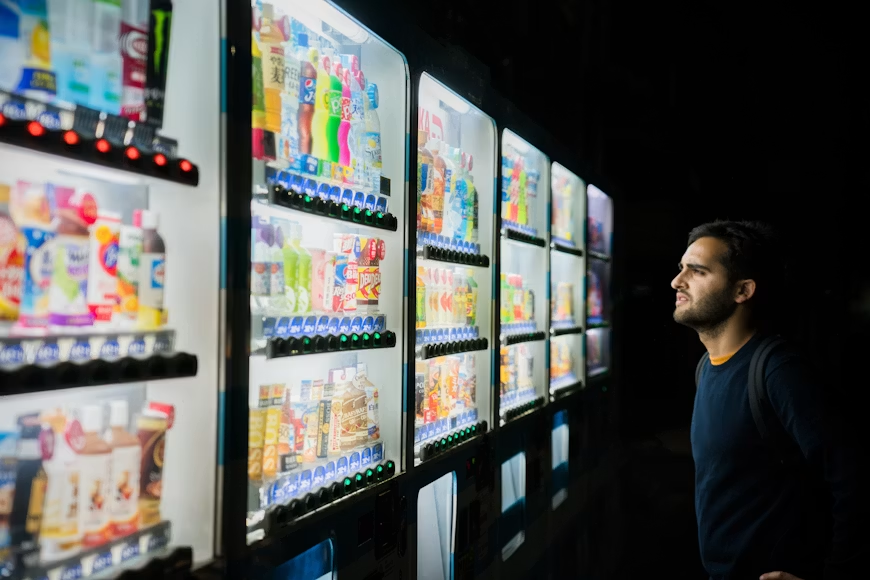
Have you ever walked past a vending machine and wondered if it could be your ticket to financial freedom? You’re not alone. The vending machine industry is experiencing a renaissance, evolving far beyond the dusty snack dispensers of the past. In 2026, the modern “unattended retail” space includes AI-powered smart markets, contactless payment systems, and a diverse range of products, making it an increasingly attractive venture for aspiring entrepreneurs. This comprehensive guide will walk you through everything you need to know about how to start a vending machine business, from initial market research to scaling your route for maximum profitability.
Learning how to start a vending machine business is about more than just buying a machine and filling it with snacks. It’s about understanding the operational intricacies, legal requirements, and strategic decisions that separate profitable operators from those who struggle. Whether you are looking for a side hustle or a new career, this guide will provide you with the practical, actionable steps needed to launch a successful vending empire.
Why Start a Vending Machine Business?
The appeal of a vending machine business is easy to understand. It offers a semi-passive income stream, low overhead compared to traditional retail, and the flexibility to work as much or as little as you want. Many successful entrepreneurs describe vending as the “21st-century lemonade stand” due to its simplicity and accessibility. The key is to approach it with a strategic mindset.
The industry has also seen significant technological advancements. Micro-markets and smart vending machines, which use AI and glass-front coolers, are driving a major portion of the industry’s revenue. This modern approach allows for selling higher-value items and provides a better customer experience, significantly boosting revenue potential. With the right location and strategy, a single well-placed machine can generate substantial monthly income.
The Financial Appeal
One of the most attractive aspects of how to start a vending machine business is the potential return on investment. While profit margins vary by product category, they typically range from 30% to 50%. Snack machines often see margins around 40-45%, while beverage machines can achieve 35-40% margins. Specialty items like electronics accessories or personal care products can command margins exceeding 50%.
Average Profitability Estimates:
-
Snack vending: 40-45% profit margin
-
Beverage vending: 35-40% profit margin
-
Specialty vending: 50-60% profit margin
-
Bulk vending: 60-70% profit margin
The Lifestyle Benefits
Beyond the financial potential, the vending business offers lifestyle advantages that appeal to many aspiring entrepreneurs:
-
Flexible scheduling and work hours
-
Low staffing requirements (many operators work solo)
-
Scalability from one machine to hundreds
-
Minimal daily interaction with customers
-
Ability to work from anywhere with internet access
Step 1: Validate Your Idea and Choose Your Business Model
Before you spend any money, you need a plan. The most crucial step in how to start a vending machine business is figuring out what you’re going to sell and where. There are several business models to consider, each with its own startup costs and profit potential.
Types of Vending Machine Businesses
Snack and Beverage Vending
This is the classic model and where most beginners start. It involves selling pre-packaged snacks like chips, candy, and pastries, along with bottled drinks. The supply chain is well-established, and demand is predictable in locations with consistent foot traffic like offices, warehouses, and hospitals. Beverage machines tend to be high-volume performers, often generating 60-70% of total revenue in combined snack/beverage operations.
Bulk Vending
This involves small, mechanical machines that dispense gumballs, stickers, or small toys for 25 to 50 cents. They require no electricity or card readers, making them the lowest-cost option to launch. While revenue per machine is low, the time and capital required are also minimal. These are often placed in grocery store entrances, laundromats, or restaurants. A single bulk machine might generate only $20-50 per month, but with 50 machines, this becomes a significant income stream with very low maintenance.
Specialty Vending
This is where you can really differentiate yourself. Specialty machines sell niche items like hot coffee, personal care products, PPE, electronics accessories, or even OTC medications. These machines can command premium prices and work best when you’ve identified a specific, underserved need in a location. For example, a coffee machine in an office with no nearby cafe can be highly lucrative, generating $500-1000 monthly from a single location.
Micro Markets and Smart Vending
This is the future of the industry. Instead of traditional coil-and-motor machines, smart vending uses AI cameras, locked glass-door cabinets, and touchscreen checkouts to create a grab-and-go experience. This allows for a wider variety of products and higher transaction values. A micro-market can do over $22,000 in a single month. However, the tradeoff is cost, with smart machines ranging from $6,000 to $15,000+.
Conduct Market Research
Once you have a general idea, perform thorough market research. Assess the competition in your target area. Look for locations that don’t currently have vending machines or where the existing machines are outdated. This research will help you identify gaps in the market and determine the demand for your specific product offerings.
Market Research Checklist:
-
Drive through commercial areas and note existing vending machines
-
Speak with business owners about their vending needs
-
Research demographics of potential locations
-
Analyze foot traffic patterns in different areas
-
Survey potential customers about product preferences
Step 2: The Golden Rule—Secure a Location Before Buying a Machine
This is perhaps the most critical piece of advice for anyone learning how to start a vending machine business: Do not buy a machine before you have a location. This is the number one mistake first-time operators make.
Choosing a machine before knowing where it will go is a recipe for disaster. A machine that’s perfect for an office might be wrong for a gym. Securing a location first allows you to tailor your machine and product selection to the specific needs of that site, ensuring immediate product-market fit. Furthermore, you avoid the sunk cost of a machine sitting in your garage while you hunt for a spot.
How to Find a Profitable Location
Location is the single biggest driver of vending profit. You need areas with high foot traffic that match your products.
Location Type and Suitability:
| Location Type | Best Products | Profit Potential | Competition Level |
|---|---|---|---|
| Offices | Snacks, beverages, coffee | High | Medium |
| Apartment Buildings | Snacks, drinks, toiletries | Medium | Low |
| Hospitals | Fresh food, hot drinks, toiletries | Very High | High |
| Gyms | Healthy snacks, protein bars | High | Medium |
| Airports | Travel items, food, drinks | Very High | Very High |
| Bus/Train Stations | Convenience items, drinks | High | High |
| Garages/Laundromats | Snacks, drinks, dry sheets | Medium | Low |
| Schools | Smart snacks (USDA compliant) | Medium | Low |
The Location Checklist:
-
Offices and Apartment Buildings: Good for snacks, drinks, and sometimes coffee
-
Hospitals: Excellent for fresh food, hot drinks, and toiletries
-
Gyms: Sell healthy snacks, protein bars, and headphones
-
Airports/Bus/Train Stations: Almost any product works for travelers
-
Garages and Laundromats: Great spots for snacks, drinks, or convenience items like dryer sheets
-
Schools: A potential location, but note that K-12 schools must meet strict USDA “Smart Snacks” nutrition standards
Securing the Deal
Approach property managers or business owners with a professional proposal. Be prepared to negotiate. You will typically have to pay the host location a commission on sales (often 5% to 25%), or you may pay a flat rental fee for the space. Always get a placement agreement in writing that clearly outlines:
-
Commission percentage or rental fee
-
Duration of the agreement
-
Responsibilities of both parties
-
Terms for termination
Prospecting Script: When approaching a location, frame it as a benefit to them. Instead of asking for permission, present it as a value-add for their employees or customers. “I provide a convenient snack and beverage service that increases employee satisfaction at no cost to you. In fact, I pay you a percentage of the sales.”
Step 3: Navigate Licenses, Permits, and Business Structure
A less glamorous but essential part of how to start a vending machine business is dealing with the legal requirements. Vending is a regulated business, and rules vary significantly by state, county, and city. There is no single federal license.
Business Setup Checklist
Business Structure:
Most operators form a Limited Liability Company (LLC) to protect their personal assets in case of a lawsuit. An LLC also provides tax flexibility and credibility with location partners. The cost to form an LLC varies by state, typically $50-500.
EIN:
Obtain an Employer Identification Number (EIN) for free from the IRS, which is required for tax filing. This is essentially a social security number for your business and is necessary for opening bank accounts and filing taxes.
Business Bank Account:
Open a separate account to keep your business finances organized. This makes tax preparation much easier and protects your personal assets. Most banks require your LLC formation documents and EIN to open a business account.
Seller’s Permit:
You will likely need a seller’s permit (sales tax permit) to collect and remit sales tax on vending sales. This is typically obtained through your state’s department of revenue.
The Regulatory Landscape in 2026
Health Permits:
If you sell perishable or refrigerated food, you will likely need a health department permit. It’s wise to start this application process early, as it can take longer than buying the equipment. Some states require regular health inspections of your machines and storage facilities.
State-Specific Licenses:
Some states, like Massachusetts, charge a flat fee per machine, while others, like Wisconsin, require a specific operator’s license for certain types of food machines (but not for prepackaged candy and chips). This variation makes research essential.
Federal Compliance:
-
ADA Compliance: Your machines must comply with the Americans with Disabilities Act (ADA) regarding reach height and controls. This includes accessible touchscreens, proper reach ranges, and clear instructions for visually impaired users.
-
Calorie Labeling: If you operate 20 or more machines, you must follow FDA calorie labeling requirements for food items. This includes displaying calorie counts clearly on product selections.
Specialized Locations:
Places like hospitals, schools, and government buildings often have stricter nutritional or security requirements. Some locations may require background checks, specific insurance coverage, or special product certifications.
Expert Tip: Start your permit and licensing research by visiting your city clerk’s office or state department of agriculture. The requirements can be surprisingly different, and a quick phone call can save you from a costly compliance error. Many operators find that local business development centers offer free consulting on these requirements.
Step 4: Acquire Your Vending Machine and Equipment
With a location secured and your legal paperwork in order, you can finally buy the machine. The type of machine you choose should be dictated by the location and the products you plan to sell.
New vs. Used Machines
New Machines:
Cost between $3,000 and $8,000+ for standard machines, while smart/micro-market setups can run $6,000 to $15,000+. They come with the latest technology, lower maintenance, and warranty protection. New machines typically have:
-
Energy-efficient compressors (saving 30-50% on electricity)
-
Modern payment systems with tap-to-pay
-
LED lighting for better product visibility
-
Advanced inventory tracking
-
1-3 year warranties on parts and labor
Used Machines:
A great way to save on startup capital. You can find them on marketplaces for as little as $1,500 to $3,000. However, you should ensure the payment systems are updated to accept modern payment methods. The used market often includes:
-
Machines from closed businesses
-
Older models still in excellent condition
-
Refurbished units with new parts
-
Less complex mechanics (easier to repair yourself)
Types of Machines by Product
Snack Machines:
These feature adjustable shelves and spiral coils that dispense items. They work well for prepackaged foods like chips, cookies, crackers, and candy bars. A good snack machine has:
-
30-50 product selection slots
-
Temperature-controlled option
-
Glass front for product visibility
-
Adjustable shelf spacing
Beverage Machines:
Designed specifically for bottles and cans. They have heavy-duty cooling systems and specialized delivery mechanisms. Features include:
-
6-12 product selections
-
Cold beverage cooling (35-40°F)
-
Can/bottle flexibility
-
Stacked or side-by-side design
Combo Machines:
Combine snack and beverage capabilities in one unit. These are ideal for smaller locations with limited space but can have capacity constraints. They typically:
-
Offer 15-20 snack selections
-
Provide 4-6 drink selections
-
Save space compared to two separate machines
-
May have slightly higher maintenance needs
Payment Technology is Non-Negotiable
Cashless payment capability is now a baseline requirement in most settings. In 2024, the cashless segment accounted for approximately 75% of U.S. vending machine revenue.
Credit/Debit Cards and Mobile Wallets:
Installing a card reader (which typically charges a 2-4% transaction fee) can increase sales by 30% or more because customers aren’t limited by the cash they have on hand. Customers expect to tap a phone or card, and if they can’t, many potential customers will just walk by.
Modern Payment Options to Offer:
-
Credit and debit cards
-
Apple Pay and Google Pay
-
Contactless tap payments
-
QR code mobile payments
-
Loyalty program integration
-
Mobile app payments
Cash:
Still relevant but is becoming less dominant. If your machine accepts cash, you’ll need to maintain a “coin float” (a reserve of coins) to make change. You’ll also need to:
-
Regular cleaning of coin and bill validators
-
Monitor bill stacker capacity
-
Keep backup coin tubes
-
Schedule regular cash collection
Installation Considerations
The installation process for vending machines is more complex than simply plugging them in. To ensure your machine is safely and correctly installed, it is often recommended to hire experienced vending movers or installers. They have specialized equipment for safely moving these heavy units and ensuring they are balanced, which prevents damage and operational issues.
Installation Checklist:
-
Ensure the location has proper electrical outlets (standard 15-amp or 20-amp circuits)
-
Verify the floor can support the machine’s weight (300-800+ pounds)
-
Check for level ground (most machines have adjustable legs)
-
Ensure adequate clearance for door opening
-
Set up internet connectivity for payment systems
Step 5: Stock, Maintain, and Scale Your Vending Route
Buying the machine is just the beginning. The ongoing success of your business depends on effective inventory management and service.
Understanding Inventory and Service Cadence
You will need to establish a service route to restock and maintain your machines. The frequency of service depends on the machine’s performance. A high-volume machine making over $500 a week may need servicing 3-5 times a week, while a low-volume machine making under $100 a week can be serviced weekly.
Service Frequency Recommendations:
| Weekly Revenue | Recommended Service Frequency |
|---|---|
| $500+ | 3-5 times per week |
| $250-500 | 2-3 times per week |
| $100-250 | 1-2 times per week |
| Under $100 | Weekly or bi-weekly |
Routine Maintenance Checklist:
-
Wipe down the machine’s exterior and glass
-
Clean the coin and bill validator
-
Test the card reader
-
Check the refrigeration temperature on cooled units
-
Inspect for jammed products and ensure all items are dispensing correctly
-
Check for expired products
-
Clear inventory based on sales data
Inventory Management Best Practices
Product Selection Strategy:
Success in vending comes from understanding what your customers actually want to buy. Pay close attention to sales data to identify popular items and phase out slow sellers. Don’t just stock items because you personally like them, as you likely aren’t the one buying from the machine.
Category Management:
-
Top Performers: Items that sell within 1-2 days of stocking
-
Steady Sellers: Items that sell at a consistent rate
-
Slow Movers: Items that take a week or more to sell
-
Dead Stock: Items that haven’t moved in two weeks (discontinue immediately)
Popular Product Categories:
-
Snacks: Chips, cookies, crackers, granola bars, protein bars
-
Beverages: Bottled water, soda, sports drinks, iced tea
-
Healthier Options: Nuts, dried fruit, rice cakes, veggie chips
-
Seasonal Items: Holiday candies, seasonal flavors
-
Impulse Items: Candy bars, gum, mints
How to Handle Challenges and Scale
Start Small:
You don’t need 100 machines to be successful. Many entrepreneurs start with a single used machine and expand based on success. Starting small allows you to:
-
Learn the business without significant risk
-
Understand the operational requirements
-
Build relationships with suppliers
-
Prove the concept before scaling
Learn from Mistakes:
Expect a learning curve. Understanding customer preferences—what sells and what doesn’t—is crucial. Track your sales and adjust your product mix accordingly. Common beginner mistakes include:
-
Overstocking slow-moving items
-
Understocking best-sellers
-
Neglecting machine maintenance
-
Poor location selection
-
Inadequate cash management
Know When to Pull a Machine:
If a machine underperforms for 60 to 90 days despite your best efforts, it’s a location problem, not a machine problem. Move it to a better location rather than continuing to service a losing proposition.
Consider Buying an Existing Route:
Some entrepreneurs choose to buy an established vending route. This provides instant revenue and contracts. You can find routes on various business marketplaces. However, due diligence is critical; verify sales records and don’t overpay for unverified numbers.
Due Diligence Checklist for Buying a Route:
-
Review 12+ months of sales records
-
Inspect all machines physically
-
Verify existing location agreements
-
Assess equipment condition
-
Check supplier relationships
-
Review employee contracts (if applicable)
-
Examine tax records
Financing Options
If you lack the cash to buy a machine outright, there are several options:
Business Credit Cards:
Good for small purchases or one or two machines. Look for cards with 0% introductory APR and rewards programs.
Equipment Financing:
Many manufacturers and specialty lenders offer financing for vending machines, sometimes even with flexible credit requirements. Terms typically range from 12-60 months.
Small Business Loans (SBA):
Suitable for larger investments like acquiring a whole route. These loans offer favorable terms but require extensive documentation.
Personal Savings:
A common method for first-time operators to prove the concept before seeking larger loans.
Alternative Options:
-
Crowdfunding platforms
-
Equipment leasing
-
Partnership arrangements
The Technology Advantage
Modern Vending Technology Explained
When you’re learning how to start a vending machine business, understanding the technology available can give you a competitive edge. Modern vending has evolved significantly from simple mechanical coin operations.
Telemetry and Data Analytics:
Modern machines often include telemetry devices that provide real-time data on:
-
Sales by product
-
Cash collected
-
Machine status
-
Inventory levels
-
Maintenance alerts
Benefits of Telemetry:
-
Plan efficient service routes
-
Reduce unnecessary trips
-
Optimize product selection
-
Monitor machine health
-
Improve cash management
Mobile Management Apps:
Many payment processor and equipment manufacturers offer mobile apps that let you monitor your machines from anywhere. You can check:
-
Sales performance
-
Inventory levels
-
Cash collection needs
-
Machine status
-
Customer preferences
Customer Experience Technology
Interactive Touchscreens:
Many newer machines feature touchscreen interfaces that:
-
Display product images
-
Show nutritional information
-
Process payments seamlessly
-
Offer personalized recommendations
-
Build customer loyalty
Digital Advertising Capabilities:
Some machines can display digital ads between transactions, creating an additional revenue stream through advertising partnerships.
Budgeting and Financial Planning
Startup Cost Breakdown
Low-Startup Approach (1-2 used machines):
-
Used machine(s): $2,000-6,000
-
Initial inventory: $300-500
-
Licenses/permits: $100-500
-
Insurance: $300-600 annually
-
Payment system fees: $200-400
-
Total estimated startup: $3,000-8,000
Moderate Startup (3-5 machines, mix of new/used):
-
Machines: $10,000-20,000
-
Initial inventory: $1,000-2,000
-
Licenses/permits: $300-1,000
-
Insurance: $600-1,200 annually
-
Payment system fees: $800-1,200
-
Total estimated startup: $12,000-25,000
Full-Scale Launch (10+ machines, new and smart):
-
Machines: $25,000-60,000
-
Initial inventory: $3,000-5,000
-
Licenses/permits: $500-2,000
-
Insurance: $1,200-2,500 annually
-
Payment system fees: $2,000-4,000
-
Total estimated startup: $30,000-75,000
Ongoing Expenses
Monthly Operating Costs:
-
Product restocking: 50-70% of revenue (leaves 30-50% margin)
-
Commissions/rent: 5-25% of gross revenue
-
Payment processing fees: 2-4% of sales
-
Electricity: $20-50 per machine monthly
-
Insurance: $25-100 per machine annually
-
Maintenance/repairs: $100-200 per machine annually
-
Licenses/permits renewals: Varies by location
Tips for Maximizing Profit:
-
Buy in bulk from wholesale clubs or restaurant suppliers
-
Use shelf-stable products to reduce waste
-
Accept commissions only when necessary
-
Negotiate better supplier pricing as volume grows
-
Consider private labeling for higher margins
-
Implement dynamic pricing for different locations
Legal Considerations and Insurance
Essential Insurance Coverage
General Liability Insurance:
Protects you if someone gets injured due to your machine (e.g., a machine falling over, or a malfunction causing an injury). Most location contracts require this and it’s relatively affordable for vending operations.
Product Liability Insurance:
Covers issues with the products you sell, such as food contamination or manufacturing defects. This is especially important if you sell consumable items.
Property Insurance:
Covers the vending machines themselves against theft, fire, or vandalism. This can protect your investment in equipment.
Business Auto Insurance:
If you use a vehicle to service your route, you’ll need commercial auto coverage. This protects you when driving between locations with inventory.
Risk Management Strategies
Protecting Your Investment:
-
Secure machines properly (bolting to floor or wall in high-theft areas)
-
Install surveillance cameras at high-risk locations
-
Keep detailed inventory and sales records
-
Develop emergency response plans
-
Build relationships with repair technicians
Scaling and Growing Your Vending Empire
From Side Hustle to Full-Time Business
Many successful vending entrepreneurs start part-time and transition to full-time as their revenue grows. Signs you’re ready to scale:
-
Existing machines are consistently profitable
-
You have saved capital for additional machines
-
You’ve learned the operational ins and outs
-
You have a system for servicing routes
-
You’re turning down location requests due to capacity
Scaling Strategies:
-
Diversify your locations: Different types of locations provide stability
-
Expand product offerings: Add specialized machines for higher margins
-
Invest in multiple machines: Volume creates efficiency
-
Optimize routes: Service multiple machines efficiently
-
Hire help: Consider employees for expansion
-
Implement technology: Use telemetry to maximize efficiency
Creating a Vending Route System
Route Planning Principles:
-
Group machines geographically
-
Plan service trips around peak sales times
-
Consider traffic patterns and weather
-
Build flexibility for special requests
-
Use route optimization software
Exit Strategies
Selling Your Vending Route:
When you’re ready to exit, an established vending route with proven cash flow can be valuable. Factors that affect valuation:
-
Number of locations and machines
-
Existing location agreements
-
Machine age and condition
-
Total revenue and profitability
-
Growth potential
-
Competition in the area
Conclusion: Making Your Vending Machine Business a Success
Starting a vending machine business is a venture with enormous potential for growth and profitability. It is not a “get rich quick” scheme, but a legitimate business that requires planning, effort, and attention to detail. By following the steps in this guide, you can navigate the complexities of the industry and build a sustainable income stream.
Key Takeaways
-
Never buy a machine without a secured location. This is the most common and costly mistake. Secure the location first, then choose the equipment that fits that specific space and customer needs.
-
Know your legal requirements. Licenses and permits vary by location—research your specific state and city thoroughly. Compliance issues can shut down your business before it starts.
-
Focus on location and product fit. A great location with the right products is the secret to high sales. Match your product selection to the customer demographics.
-
Embrace cashless payments. The modern consumer expects to tap and pay. Cashless payment can increase revenue by 30% or more and reduce theft risk.
-
Start small and learn. A single, well-run machine can be the foundation for a large, profitable route. Learn the basics before scaling to avoid expensive mistakes.
-
Maintain machines regularly. Preventative maintenance reduces breakdowns and extends the life of your equipment. A clean, working machine encourages repeat business.
-
Track everything. Use data to make decisions about product selection, pricing, and location performance. Data-driven decisions are more profitable.
Actionable Steps for Your First Week
-
Conduct a location audit: Spend 1-2 days driving around your area, noting potential locations and existing machines.
-
Begin legal research: Call your city clerk’s office to learn about local permit requirements.
-
Start a business plan: Outline your business model, target locations, and financial projections.
-
Open a business bank account: Separate your personal and business finances.
-
Create a professional presentation: Prepare your pitch for approaching business owners about machine placement.
Moving Forward
Success is built one decision, one machine, and one location at a time. The vending machine business offers a rare combination of low entry barriers and high scaling potential. Whether you are looking for a side hustle that could supplement your income or a full-time business that could replace your 9-to-5 job, the vending industry has opportunities for everyone.
The key is to take action. Knowledge without implementation has no value. Start by identifying a single promising location and reaching out to the property owner. The vending community is full of operators who started with nothing and built profitable businesses through persistence and smart decisions.
Remember that every successful vending operator was once a beginner. They made mistakes, learned from them, and continued to improve. The difference between them and those who never start is simply taking that first step.
Your vending empire awaits. The machines are out there, the locations are waiting, and the customers are ready to buy. The only question is: Are you ready to start?