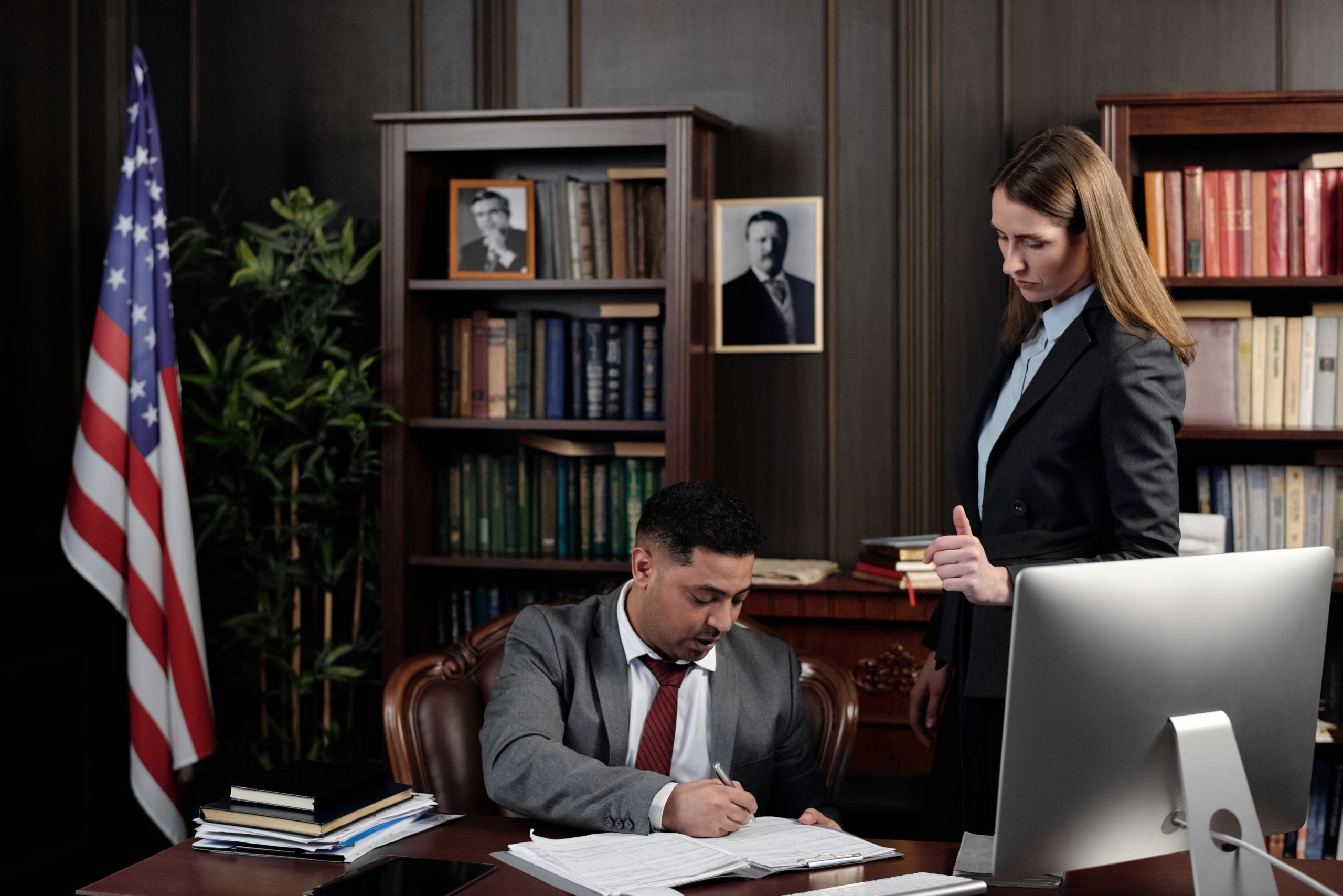
The professional world has undergone a dramatic sartorial transformation. For decades, offices were dominated by suits, ties, and formal skirts—a uniform that signified professionalism and respectability. But the rise of tech startups, the casualization of culture, and especially the shift to remote work during the pandemic have blurred the lines of what’s acceptable office wear.
Now, one of the most debated questions in workplace fashion is: are jeans business casual?
The answer isn’t a simple yes or no. It’s a nuanced, context-dependent “it depends.” This comprehensive guide will delve deep into the world of business casual attire, exploring when denim is appropriate, how to style it effectively, and what to avoid. Whether you work in a creative agency, a law firm, or a tech startup, this article will help you confidently answer the question: are jeans business casual for your workplace.
What Exactly Is Business Casual?
Before we can determine if jeans fit the bill, we need to define “business casual.” This dress code is notoriously difficult to pin down. It’s meant to be a broad, subjective dress code that allows employees to express themselves while maintaining an appropriate appearance. It sits somewhere between formal business attire—think full suits and ties—and completely casual streetwear.
However, its interpretation varies wildly. The term “business casual” has always been slightly vague when it comes to deciphering dress codes. This is partly by design, allowing companies to tailor expectations to their specific culture and industry norms.
The Business Casual Spectrum
Business casual is not a one-size-fits-all term. It exists on a spectrum, often influenced by:
-
Industry: Tech and creative industries tend to be more casual, while law, finance, and government lean formal.
-
Geography: Workplaces in California or other casual regions are often more open to jeans, while conservative East Coast offices might not be.
-
Company Culture: A startup with a ping-pong table in the lobby probably has a different dress code than a century-old financial institution.
-
Specific Occasion: Casual Friday is very different from a day with an important client presentation.
In a broader sense, business casual might include chinos, dress pants, collared shirts, blouses, and blazers—items that mix formal and casual elements. But the question remains: does business casual include jeans? Increasingly, the answer is yes, but with conditions.
The Evolution of Workplace Attire
Understanding whether jeans are business casual requires looking at how workplace fashion has evolved over the past few decades. The 1950s and 60s saw rigid dress codes where men wore suits and ties daily while women wore dresses or skirt suits. The 1970s and 80s brought power suits and shoulder pads as women entered the corporate world in greater numbers.
The 1990s introduced “Casual Friday” as companies began relaxing dress codes one day a week. This was a revolutionary concept that allowed employees to wear jeans—but only on Fridays. The dot-com boom of the late 1990s and early 2000s accelerated this trend, with tech companies adopting permanently casual dress codes.
The COVID-19 pandemic of 2020 represented perhaps the most significant shift. With millions working from home, formal office attire largely disappeared. As offices reopened, many companies adopted permanent hybrid or flexible policies, and dress codes became more relaxed than ever before. This evolution has made the question “are jeans business casual” more relevant than ever.
Are Jeans Business Casual? The Definitive Answer
So, are jeans business casual? The short answer is yes, but only under the right conditions. The long answer requires understanding the “rules” of denim in the workplace.
Fashion is leaning more and more toward the casual end of the spectrum as each year goes by, especially in a post-2020 world. However, not every office is going lax. It’s essential to gauge the climate of your unique office and take note of what the standard protocol is amongst your co-workers.
The consensus among stylists and fashion experts is that not all jeans are business casual. The key to pulling it off lies in three main areas: fit, color, and condition.
The Importance of Fit
The fit of your jeans is arguably the most critical factor when determining if they are appropriate for a business casual setting. The experts are unanimous: slim, straight-leg, and tailored cuts are the safest choices.
Tailored Fits: You want to make sure you’re wearing the right size, not too tight, or too baggy. A straight-leg type is ideal for most body types and presents a clean, professional silhouette.
Avoid Extremes: Baggy, loose-fitting jeans are generally too casual for the office. They can look sloppy and unkempt, which is the opposite of what you want in a professional setting. Similarly, overly skinny or tight jeans may be inappropriate, especially if they look uncomfortable or overly revealing. Slim, straight, or tailored cuts that flatter your frame without being too tight or too loose is the recommended approach.
Rise Matters: Opt for a mid or high-rise jean. A high waist ensures that when you sit down, your back is covered, maintaining a professional look and preventing any accidental exposure.
Length and Hem: Jeans should hit at or just above the ankle. This length works well with most shoes and creates a clean line. Avoid jeans that bunch up excessively at the bottom, as this looks sloppy. Also, avoid excessively cropped or “flood” lengths that end well above the ankle.
The Color and Wash Guide
Color is the second crucial element that can make or break a business casual denim look. The rule of thumb is the darker, the better.
Dark Wash: Dark blue, indigo, and black jeans are universally considered the most professional. They are your best friend here—clean, minimal, and polished enough for most office environments. Dark washes read as more formal and sophisticated than their lighter counterparts.
Black Jeans: Are black jeans business casual? Yes, they are even more forgiving than dark blue denim. Black is a neutral color associated with formality and sophistication, making it a plausible choice in many settings. Black jeans can easily be dressed up with a blazer and dress shirt.
Light Wash and White Jeans: Lighter washes are riskier. They are perceived as more casual and are best reserved for Casual Friday or a very relaxed office culture. Light wash jeans often have a more rugged, weekend vibe that doesn’t translate well to professional environments. White jeans are rarely appropriate for business casual. They read instantly as casual weekend wear and are difficult to style professionally.
Fading and Distressing: Any jeans with rips, tears, fraying, or heavy artificial fading are a “no-go” for business casual. These details telegraph a rugged, casual aesthetic that doesn’t belong in a professional setting. Distressed denim suggests a lack of care and attention to detail that contradicts professional values.
Condition Matters
Beyond fit and color, the overall condition of your jeans signals professionalism.
Clean and Crisp: Jeans should be clean, pressed, and wrinkle-free. This seems obvious but is worth emphasizing. Wrinkled or stained jeans undermine any attempt at a professional appearance.
Quality Denim: Investing in high-quality denim with minimal branding or embellishments is best. High-quality denim that combines premium stretch for unmatched comfort with sophisticated style is ideal. Quality denim holds its shape better, lasts longer, and generally looks more polished.
No Fraying or Holes: Even if you have a pair of jeans with intentional distressing, save them for outside the office. Fraying hems and worn spots look casual and unprofessional in a business setting.
When Are Jeans Acceptable as Business Casual?
The context in which you’re wearing the jeans is just as important as the jeans themselves. Understanding when jeans are appropriate can help you navigate workplace dress codes with confidence.
Casual Fridays
This is the classic time to wear jeans. In many workplaces, a relaxed dress code is explicitly permitted on Fridays, and jeans are the go-to choice. Casual Fridays at the office are also perfect opportunities to wear jeans while maintaining professionalism. Employees often look forward to Fridays as a chance to express more personal style while still looking put-together.
The “Feeling-Out” Process
If you’re new, play it safe on the first day and then try to get an idea of what everybody else is wearing to the office. If they wear dark wash jeans, you can add dark wash jeans. If they never wear jeans, you probably shouldn’t. This approach allows you to observe the actual workplace culture rather than relying on written policies that might not reflect reality.
Specific Industries
Jeans are more commonly accepted in creative industries where personal style matters, tech companies with relaxed dress codes, and startups. They are also suitable for roles in casual dining restaurants or retail environments. In these settings, jeans can signal that you’re approachable and in touch with current trends.
Smart Casual Events
Are jeans business casual for a networking event or a conference? It depends. If the event is described as “smart casual,” dark jeans can often work. Smart casual typically allows for more personal expression while maintaining an overall polished appearance. However, for a formal presentation or meeting with clients, it’s safer to avoid them. When in doubt, overdressing is always better than underdressing.
Remote and Hybrid Work
With the rise of remote and hybrid work, the question “are jeans business casual” has taken on new dimensions. For video calls, viewers can only see your top half. However, it’s still wise to dress professionally from the waist up. On days when you’re in the office, the same rules apply regarding fit, color, and condition.
How to Style Jeans for a Business Casual Look
If you’ve determined that jeans are acceptable in your workplace, the next question is how to style them. The key is to balance the casual nature of denim with more polished and professional pieces. This is where the magic of the business casual look really comes together.
The Blazer and Jeans Combo
The blazer is the ultimate piece to smarten up a pair of jeans. The structured nature of a blazer instantly elevates the outfit.
-
A Classic Combo: A well-tailored blazer with dark wash denim and loafers or a crisp white button-down with black jeans and a statement pump are excellent examples of balancing casual and professional.
-
Texture Matters: A nicely textured blazer in a fabric like tweed, linen, or cotton can pair perfectly with jeans and add visual interest. The contrast between the formal structure of the blazer and the casual nature of denim creates a sophisticated, modern look.
The Polished Top
What you wear on top is crucial. Swap the t-shirt for a more formal option.
-
Button-Down Shirts: A crisp button-down or a classic white shirt with dark jeans is a foolproof business casual look. This combination works well for both men and women and can be adapted to suit various personal styles.
-
Blouses: A silk blouse or a structured top is a great option for women. Silk adds a touch of luxury and sophistication that balances the casualness of denim.
-
Knitwear: A fine-gauge sweater, turtleneck, or even a knitted polo adds a touch of sophistication. A cashmere sweater is an excellent choice for a refined and comfortable look. Cashmere’s soft, luxurious feel elevates any outfit.
Footwear That Elevates
Your shoes can make or break your business casual outfit. The goal is to move away from overly casual footwear.
-
Leather Shoes: Loafers, Oxfords, Derby shoes, and dress boots are excellent choices for men. These classic shoe styles add formality and sophistication.
-
Professional Shoes for Women: Loafers, professional flats, heeled boots, and pumps all complement dark denim beautifully. These options range from comfortable to elegant, depending on your preference.
-
Avoid: Sports sneakers, flip-flops, and worn-out trainers are generally too casual. Even clean, minimalist sneakers may not be appropriate in more formal business casual environments.
Accessories
Accessories complete the polished look and add intentionality.
-
Belts: A sleek leather belt is a must. It should complement your shoes. This small detail shows attention to your overall appearance.
-
Watches: A classic leather or metal watch adds a touch of professionalism. A watch signals that you value time and punctuality.
-
Jewelry: Simple, understated jewelry is best. Avoid large statement pieces or anything too flashy. The goal is to add polish without distraction.
-
Bags: A structured leather bag or briefcase looks more professional than a casual backpack or tote bag.
Styling Jeans for Business Casual: Dos and Don’ts
To make it easier, here is a quick-reference guide on how to style your jeans for a business casual environment.
Do:
| Category | Recommendation |
|---|---|
| Fit | Choose slim, straight-leg, or tailored cuts. |
| Color | Wear dark wash, indigo, or black jeans. |
| Top | Pair with a button-down shirt, blouse, blazer, or knitwear. |
| Shoes | Wear leather loafers, Oxfords, derbies, or clean dress boots. |
| Accessories | Keep accessories simple, such as a leather belt and watch. |
| Condition | Ensure your jeans are clean, pressed, and without rips or stains. |
Don’t:
| Category | Recommendation |
|---|---|
| Fit | Avoid baggy, low-rise, or overly tight jeans. |
| Color | Avoid light wash, white, distressed, or faded jeans. |
| Top | Don’t wear graphic t-shirts, hoodies, or overly casual tops. |
| Shoes | Don’t wear athletic sneakers, flip-flops, or sandals. |
| Accessories | Avoid casual backpacks, baseball caps, or flashy jewelry. |
| Condition | Don’t wear jeans with rips, tears, or fraying. |
Specific Scenarios: Are Jeans Business Casual in Different Settings?
To provide more clarity, let’s examine specific scenarios and whether jeans would be considered business casual in each.
The Modern Tech Office
Setting: A Silicon Valley tech company with an open floor plan, casual culture, and young workforce.
Verdict: Yes, jeans are definitely business casual here. In fact, they might even be considered dressed up. The culture values comfort and individuality, and jeans are standard attire. However, even in this relaxed environment, ripped jeans or overly distressed denim might raise eyebrows.
Recommended Style: Dark wash, slim-fit jeans paired with a nice t-shirt or casual button-down and clean sneakers or leather boots. A blazer might actually look out of place in this setting.
The Traditional Law Firm
Setting: A prestigious law firm in a major city with a formal dress code and conservative culture.
Verdict: Generally no. Jeans are typically not considered business casual in traditional law firms. The expectation is usually suits, dress pants, or skirts. Some firms may allow jeans on casual Fridays, but this is becoming less common as formal dress codes persist.
Recommended Style: If jeans are allowed on a rare casual day, choose dark wash, perfectly tailored jeans with a blazer and dress shirt. Even then, it’s wise to observe what partners and senior associates are wearing.
The Creative Agency
Setting: An advertising, design, or marketing agency where creativity is valued and personal expression is encouraged.
Verdict: Yes, jeans are usually perfectly acceptable. Creative industries often embrace individuality, and jeans are a staple of the workplace wardrobe. In fact, showing up in a suit might make you seem out of touch.
Recommended Style: Fashion-forward cuts, interesting washes (still dark), and creative styling with unique tops or accessories. This is where you can have fun with your denim while still looking professional.
The Financial Services Company
Setting: A bank, investment firm, or insurance company with a conservative dress code and client-facing employees.
Verdict: Rarely. Financial services tend to be among the most formal industries. Jeans are almost never considered business casual, even on Fridays. The expectation is typically suits or at minimum, dress pants and blazers.
Recommended Style: Stick to dress pants, chinos, or skirts. Avoid denim entirely unless the company has explicitly announced a change to the dress code.
The Hospital or Medical Office
Setting: A healthcare environment where employees may interact with patients directly.
Verdict: Depends on role. Administrative staff may be able to wear jeans in a business casual environment, but clinical staff typically wear scrubs or professional attire. Patient-facing roles require a polished, trustworthy appearance.
Recommended Style: Administrative staff should follow the same rules as other business casual environments—dark wash, well-fitting jeans with professional tops. Clinical staff should follow dress code requirements for their specific roles.
The Educational Institution
Setting: A school, university, or educational nonprofit where teachers, administrators, and support staff work.
Verdict: Often yes. Many educational institutions have adopted business casual dress codes that include jeans. However, this varies widely by institution type and level.
Recommended Style: Dark wash jeans with comfortable but professional tops and shoes. In educational settings, practicality and comfort are important while maintaining a professional image.
Common Mistakes to Avoid When Wearing Jeans to Work
Even when jeans are acceptable, certain mistakes can undermine your professional appearance. Here are common pitfalls to avoid.
Mistake #1: Wearing the Wrong Shoes
Your footwear choices can completely change how your jeans are perceived. Athletic sneakers, worn-out trainers, or casual sandals are almost always too casual for a business casual environment. Even if the office culture is relaxed, shoes that look like they belong in a gym or at the beach will make your entire outfit seem less professional.
Solution: Invest in at least two pairs of quality leather or suede shoes that can be worn with jeans. Loafers, brogues, Chelsea boots, and clean dress sneakers are all good options. Ensure your shoes are clean and in good condition.
Mistake #2: Ignoring Fit
Ill-fitting jeans can ruin even the most carefully styled outfit. Jeans that are too tight can look unprofessional and uncomfortable. Jeans that are too baggy can look sloppy and dated. Both extremes send the wrong message about your attention to detail.
Solution: Take the time to find jeans that fit well. Consider having them tailored if needed. A small investment in alterations can make a huge difference in how professional your jeans look.
Mistake #3: Inappropriate Tops
Pairing jeans with an overly casual top—think graphic t-shirts, hoodies, or tank tops—will make your outfit look like weekend wear rather than business attire. Even if jeans are acceptable, the top you wear matters significantly.
Solution: Choose tops that would look appropriate even without the jeans. A button-down shirt, silk blouse, fine-gauge sweater, or blazer all work well. The contrast between the casual jeans and the polished top creates the business casual look.
Mistake #4: Ignoring Accessories
Accessories can elevate or undermine your outfit. Sports watches, casual backpacks, and flashy jewelry can detract from a professional appearance. On the other hand, the right accessories can add polish.
Solution: Choose a leather or metal watch, a quality leather bag, and simple jewelry. Your belt should match your shoes. These small details show that you’ve put thought into your appearance.
Mistake #5: Wearing Distressed or Faded Jeans
Even if dark jeans are acceptable, distressed, faded, or ripped jeans are almost never appropriate for business casual. These styles are firmly in the “casual” category and should be saved for weekends.
Solution: Reserve your distressed jeans for outside the office. For work, maintain a separate pair of clean, dark-wash jeans in excellent condition.
Mistake #6: Overlooking Grooming
Even the best jeans won’t look professional if your overall grooming is lacking. Messy hair, unkempt facial hair, or poorly maintained nails can undermine your professional image.
Solution: Pay attention to overall grooming. Clean, styled hair, well-maintained facial hair (if applicable), and neat nails all contribute to a polished appearance.
Building a Business Casual Wardrobe with Jeans
If you’ve determined that jeans are appropriate for your workplace, building a wardrobe around them is straightforward. Here’s how to create a versatile business casual wardrobe that includes jeans.
Essential Jeans
Invest in two to three pairs of high-quality jeans in dark washes:
-
Dark Blue/Indigo: This is your most versatile option. Works with virtually everything.
-
Black: Slightly more formal than blue, black jeans are excellent for creating sophisticated looks.
-
Gray or Charcoal: A less common but equally professional option. Gray pairs well with many colors.
Choose classic cuts that flatter your body type. Avoid trendy cuts that may look dated quickly. Quality denim will last for years with proper care.
Essential Tops
Build a collection of tops that pair well with jeans:
-
Button-Down Shirts: White, light blue, and subtle patterns are all versatile options.
-
Blouses: Silk or silk-blend blouses in neutral or jewel tones.
-
Knitwear: Fine-gauge sweaters, turtlenecks, and cashmere pieces.
-
Blazers: One or two well-tailored blazers in neutral colors like navy, gray, or black.
Essential Shoes
Invest in quality shoes that work with jeans:
-
For Men: Loafers, Oxfords, Derby shoes, Chelsea boots, or brogues.
-
For Women: Loafers, pumps, heeled boots, or professional flats.
Choose colors that coordinate with your wardrobe—brown, black, and burgundy are versatile options.
Essential Accessories
Complete your wardrobe with:
-
Belts: Leather belts that match your shoes.
-
Watches: Classic leather or metal watches.
-
Bags: Structured leather or high-quality fabric bags.
-
Jewelry: Simple pieces that add polish without distraction.
Sample Outfits
Here are three sample outfits that demonstrate how to style jeans for business casual:
Outfit 1: Classic Professional
-
Dark blue, straight-leg jeans
-
White button-down shirt
-
Navy blazer
-
Brown leather loafers
-
Matching brown belt
-
Simple leather watch
Outfit 2: Modern and Sophisticated
-
Black, slim-fit jeans
-
Cream silk blouse
-
Gray cashmere sweater (layered over blouse)
-
Black leather ankle boots
-
Gold minimalist necklace
-
Black leather bag
Outfit 3: Creative and Comfortable
-
Dark gray, tailored jeans
-
Fine-gauge navy turtleneck
-
Tan suede Chelsea boots
-
Tan leather belt
-
Silver watch with leather strap
The Role of Company Policies
Ultimately, the question “are jeans business casual” is best answered by your company’s specific policies. Many organizations have written dress code policies that specify what is and isn’t acceptable. These policies may be found in:
-
Employee Handbooks: Most companies include dress code information in their official policies.
-
Internal Websites: Many companies post dress code guidelines on their internal websites or intranet.
-
Managers: Your manager is a good resource for understanding what’s acceptable in your specific team or department.
Reading Between the Lines
Sometimes company policies are vague or outdated. If your policy says “business casual” without specifying jeans, you may need to interpret what that means for your workplace. Consider:
-
What do colleagues wear? This is your best indicator of actual expectations.
-
What does leadership wear? Observing managers and executives gives you a sense of the culture.
-
Are there exceptions? Some policies may allow jeans on casual Fridays but not during client meetings.
When in Doubt, Ask
If you’re unsure whether jeans are acceptable, asking is perfectly reasonable. Frame the question professionally:
-
“I’m reviewing the dress code and wanted to understand if dark jeans are considered appropriate for business casual.”
-
“I noticed several colleagues wearing jeans. Is that allowed regularly, or only on specific days?”
This approach shows respect for company norms while seeking clarity. Most managers appreciate employees who care about adhering to professional standards.
The “Better to Be Overdressed” Approach
When starting a new job or when uncertain, err on the side of formality. Dressing more professionally than required won’t hurt your reputation, while dressing too casually might. You can always dress down after observing the culture, but you can’t take back a bad first impression.
Expert Tips for Wearing Jeans Professionally
Professional stylists and fashion experts offer several tips for making jeans work in business settings.
Tip 1: Focus on Fabric
The quality and weight of denim matter significantly. Heavyweight denim (10-14 oz) holds its shape better and looks more substantial. Lightweight denim can look flimsy and cheap. Premium denim made from high-quality cotton with minimal synthetic fibers generally looks more professional.
Tip 2: Minimalism is Key
When it comes to jeans in the workplace, less is more. Avoid excessive pockets, overly large belt loops, or visible branding. The cleaner the silhouette, the more professional the look.
Tip 3: Coordinate Colors
Your entire outfit should work together color-wise. Dark jeans work with almost any color, but lighter tops generally look more professional. Avoid pairing dark jeans with dark tops unless there’s sufficient contrast to avoid looking overly somber.
Tip 4: Pay Attention to Proportions
The proportions of your outfit matter. If you’re wearing slim-fit jeans, balance them with a slightly looser top. If you’re wearing straight-leg jeans, a fitted top creates a clean silhouette. The goal is to look balanced and intentional rather than haphazard.
Tip 5: Iron or Steam
Wrinkled jeans look unprofessional. While jeans are more forgiving than dress pants, they should still be wrinkle-free. A quick steam or iron before wearing them makes a significant difference.
Tip 6: Seasonality Matters
Heavier denim and darker washes work well in fall and winter. Lighter fabrics and slightly lighter washes (still dark, not light) can be appropriate in summer months, especially in warmer climates. Adapt your denim choices to the season.
Tip 7: Know When to Skip Jeans
Even if jeans are generally acceptable, there are times when they’re not appropriate:
-
Job interviews (unless you’re sure of the company’s culture)
-
Client meetings with formal clients
-
Presentations to senior leadership
-
Formal company events
-
When you’re representing the company in any official capacity
Jeans and Professionalism: A Deeper Look
The question “are jeans business casual” touches on deeper issues about professionalism and workplace culture. Understanding these underlying dynamics can help you make better decisions about your attire.
Professionalism Redefined
What constitutes “professional” attire has evolved significantly. In the past, professionalism was closely tied to traditional, formal clothing. Today, professionalism is increasingly defined by:
-
Competence and Skill: Your ability to do your job well matters more than what you wear.
-
Adaptability: Understanding and meeting workplace expectations shows emotional intelligence.
-
Cultural Fit: Dressing appropriately for your workplace culture demonstrates that you understand the environment.
Jeans can absolutely be part of a professional image when worn appropriately. The goal is to project competence, confidence, and respect for your workplace.
The Comfort Factor
One reason jeans have become more accepted in professional settings is comfort. Employees who are comfortable are often more productive. As one expert noted, “When individuals are comfortable in their clothing, their mood, productivity, and general wellbeing are dramatically improved” .
This doesn’t mean comfort at any cost. It means finding a balance between comfort and professionalism that allows you to do your best work. Well-fitting, quality jeans can provide this balance.
Generational Differences
Generational differences play a role in how jeans are perceived in the workplace. Younger workers tend to view jeans as standard professional attire, while older workers may view them as more casual. Understanding these perspectives can help you navigate dress code expectations, especially in multigenerational workplaces.
Geographic Differences
Geography also influences perceptions of jeans in the workplace. Offices in the Northeast tend to be more formal than those in the South or West. Urban offices tend to be more fashion-forward than suburban or rural offices. International offices have their own norms and expectations.
The Bottom Line on Jeans in Business Casual Environments
To summarize everything we’ve covered, here’s the definitive bottom line on whether jeans are business casual:
Yes, jeans can be business casual—but only when:
-
The jeans are dark-wash, black, or dark gray
-
The jeans are in excellent condition with no rips, tears, or fading
-
The jeans fit well and flatter your body type
-
The jeans are styled with professional tops, shoes, and accessories
-
Your workplace culture and policies support wearing jeans
-
You’re not in a formal meeting, interview, or client-facing situation
Jeans are not business casual when:
-
They’re light-wash, white, or distressed
-
They’re too tight, too baggy, or poorly fitting
-
They’re styled with overly casual tops or shoes
-
Your workplace has a formal dress code
-
You’re representing the company in an official capacity
Quick Checklist for Wearing Jeans Professionally
Before you wear jeans to work, ask yourself these questions:
-
Are these jeans dark enough? Dark wash or black is best.
-
Are these jeans in good condition? No rips, stains, or fading.
-
Do these jeans fit well? Not too tight, not too baggy.
-
Am I wearing professional footwear? No sneakers, flip-flops, or overly casual shoes.
-
Is my top professional? No t-shirts, hoodies, or overly casual items.
-
Am I accessorizing appropriately? Keep it simple and professional.
-
Is the occasion appropriate? No interviews, presentations, or client meetings.
-
Does my company allow jeans? Check policies and observe colleagues.
Frequently Asked Questions About Jeans and Business Casual
Are dark jeans business casual?
Yes, dark jeans are generally considered business casual when styled appropriately with professional tops and shoes. Dark wash denim reads as more formal than lighter washes and is the most widely accepted option.
Are black jeans business casual?
Yes, black jeans are even more versatile than dark blue jeans. Black is a neutral color associated with sophistication and formality. Black jeans can be dressed up easily with blazers, button-downs, and professional shoes.
Are ripped jeans business casual?
No, ripped or distressed jeans are almost never appropriate for business casual. The exception might be an extremely creative workplace with a very relaxed culture, but even then, it’s a risk. Save distressed denim for weekends.
Are white jeans business casual?
Rarely. White jeans are firmly in the casual category and are difficult to style professionally. They’re best reserved for casual settings outside the office.
Can men wear jeans business casual?
Yes. The same rules apply to men as to women: dark wash, well-fitting jeans in excellent condition, styled with professional tops and shoes. Men should avoid overly casual footwear and tops.
Can women wear jeans business casual?
Yes. Women have slightly more flexibility with cuts and styles, but the same principles apply: dark wash, good fit, professional styling. Women can also incorporate more fashion-forward elements while maintaining professionalism.
Are jeans okay for business casual interviews?
Generally, no. Unless you’re absolutely certain the company has a very casual culture, it’s better to avoid jeans for interviews. Dress pants, chinos, or skirts are safer choices. First impressions matter, and it’s better to overdress than underdress.
What are business casual jeans alternatives?
If jeans aren’t appropriate for your workplace, consider these alternatives:
-
Chinos: A classic business casual option that’s comfortable but more formal than jeans.
-
Dress pants: The most formal option in the business casual category.
-
Corduroys: A stylish alternative, especially in cooler months.
-
Khakis: Another classic option that’s versatile and comfortable.
Can I wear jeans on casual Friday?
Yes, Casual Friday is the classic time to wear jeans. Even workplaces that don’t allow jeans during the week often permit them on Fridays. This tradition has been part of workplace culture since the 1990s.
Are jeans with holes acceptable for business casual?
No. Any visible holes, even intentionally distressed ones, are generally not acceptable for business casual. Save these for outside the office.
Conclusion: Are Jeans Business Casual? Your Actionable Takeaways
The question “are jeans business casual” has become increasingly common as workplace dress codes evolve. The answer is nuanced but clear: yes, jeans can be business casual, but careful consideration is required.
As we’ve explored throughout this guide, the key to wearing jeans professionally lies in understanding your specific workplace culture, choosing the right jeans, and styling them appropriately. Dark wash, well-fitting jeans in excellent condition paired with professional tops, shoes, and accessories create a polished business casual look that works in many modern workplaces.
However, it’s equally important to recognize when jeans are not appropriate. Formal meetings, client presentations, interviews, and certain industries—such as law and finance—often require more formal attire. Understanding these nuances demonstrates professional judgment and respect for your workplace.
Actionable Takeaways for Your Business Casual Journey
-
Assess Your Workplace Culture: Observe what colleagues and leadership wear. When in doubt, ask or err on the side of formality.
-
Invest in Quality Denim: Purchase two to three pairs of high-quality jeans in dark washes. Quality denim lasts longer, fits better, and looks more professional.
-
Style Intentionally: Pair jeans with professional tops, shoes, and accessories. The contrast between casual denim and polished pieces creates the business casual look.
-
Maintain Your Jeans: Keep jeans clean, pressed, and in excellent condition. Avoid distressing and visible wear.
-
Know When to Skip Jeans: Save jeans for appropriate occasions. When representing the company in an official capacity, choose more formal attire.
-
Build a Versatile Wardrobe: Create a collection of tops, shoes, and accessories that work with your jeans and other business casual pieces.
-
Stay Informed: Workplace dress codes continue to evolve. Stay aware of changes in your company’s policies and industry norms.
By following these guidelines, you can confidently answer the question “are jeans business casual” for your workplace and build a professional wardrobe that balances comfort with professionalism.
Final Thoughts
The professional world has embraced greater flexibility and individuality in attire, and jeans have become a staple of many business casual wardrobes. When chosen and styled carefully, jeans can project confidence, competence, and an understanding of modern workplace culture.
Remember that professionalism is ultimately about more than what you wear—it’s about how you carry yourself, how you treat others, and the quality of your work. Your clothing should support these values, not detract from them. When you approach the question “are jeans business casual” with thoughtfulness and awareness, you demonstrate the kind of professional judgment that employers value.
Whether you’re starting a new job, navigating a changing dress code, or simply updating your work wardrobe, the guidelines in this article provide a comprehensive framework for making smart decisions about denim in the workplace. With the right approach, you can wear jeans confidently and professionally, knowing that you’ve made an informed choice that respects both your personal style and your workplace culture.