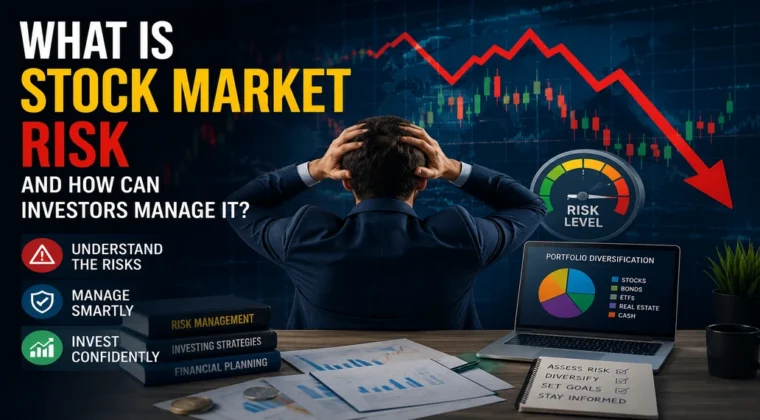
The world of stock market investing holds immense potential for wealth creation, yet it is inextricably linked with uncertainty. This inherent uncertainty is what we refer to as stock market risk. For many, the concept can seem abstract and intimidating, but understanding its nature is the first and most crucial step toward becoming a successful, confident investor. This comprehensive guide will demystify the various dimensions of stock market risk, break down the different types of risks you may encounter, and provide actionable strategies to manage and mitigate them effectively.
Understanding the Core Concept of Stock Market Risk
At its most fundamental level, stock market risk is the possibility that an investment’s actual return will differ from the expected return, primarily posing the threat of losing some or all of the original capital. It is the financial reality that the future is unpredictable. When you purchase a share of a company, you are buying a stake in its future earnings and growth. However, a multitude of factors can prevent a company from achieving its goals, leading to a decline in its stock price.
This risk is not a single, monolithic entity. It is a complex web of potential threats that can be broadly categorized to help investors understand and address them. Recognizing that the potential for loss is a fundamental part of the investment landscape is not about being pessimistic; it’s about being realistic. As an investor, your goal is not to eliminate risk entirely—which is impossible—but to understand and manage it in a way that aligns with your personal financial goals and emotional capacity to handle market fluctuations.
According to Investopedia, risk is defined as “the chance that an investment’s actual return will differ from the expected return,” and it includes the possibility of losing some or all of the original investment. This foundational understanding is critical before diving deeper into the types of risks investors face.
The Primary Types of Stock Market Risk
To effectively manage stock market risk, one must first understand its various forms. These risks can be divided into two main categories: systematic and unsystematic. The total risk of an investment is a combination of these two elements.
Systematic Risk: The Unavoidable Market Forces
Systematic risk, also known as market risk or non-diversifiable risk, is the uncertainty inherent to the entire financial market or a broad segment of it. This type of risk is driven by macroeconomic factors that affect all companies, regardless of their individual performance. It is the risk of a widespread downturn that impacts the market as a whole.
Key drivers of systematic risk include:
-
Economic Conditions: Recessions, periods of slow growth, or economic booms all affect corporate earnings. For instance, a recession typically leads to lower consumer spending and reduced business investment, which can cause profits to fall across nearly all sectors.
-
Geopolitical Events: Wars, political instability, terrorism, and trade disputes can create significant uncertainty. For example, escalating tensions in the Middle East can trigger a spike in oil prices, which then ripples through the global economy, increasing costs for businesses and consumers.
-
Interest Rate Changes: Central banks use interest rates to manage inflation. When interest rates rise, borrowing becomes more expensive for companies, which can reduce their profitability and future growth prospects. Furthermore, higher yields on government bonds (like the U.S. Treasury) can make them more attractive than riskier assets like stocks, drawing investment away from the equity market.
-
Inflation: Rising inflation erodes the purchasing power of money. For an investor, this means the real value of future returns declines. It also forces companies to pay more for raw materials and labor, potentially squeezing profit margins if they cannot pass these costs on to consumers.
A key characteristic of systematic risk is that it is extremely difficult to predict and nearly impossible to avoid through diversification. As one analyst noted, “higher yields don’t matter for stocks until they do,” highlighting the sudden impact these macroeconomic shifts can have. This is the core of the risk that is always present in the market.
For a deeper understanding of how economic factors influence markets, you can explore Wikipedia’s page on systematic risk, which provides a comprehensive overview of how market-wide events affect investment portfolios.
Unsystematic Risk: Company and Industry-Specific Perils
Unsystematic risk, also known as specific risk or idiosyncratic risk, is the uncertainty tied directly to a particular company or industry. Unlike systematic risk, this type can be significantly reduced through diversification. By spreading your investments across many different companies and sectors, you can mitigate the impact of a negative event that only affects one specific business.
Common forms of unsystematic risk include:
-
Business Risk: This refers to a company’s operational performance. Factors like poor management decisions, the loss of a key executive, a failed product launch, or losing market share to a competitor can all cause a company’s stock price to plummet. A company’s financial health, including its level of debt, is a critical component of this risk.
-
Liquidity Risk: Liquidity risk arises when an investor cannot quickly buy or sell a stock without causing a significant price change. Stocks with low trading volume are illiquid. If you need to sell an illiquid stock in a hurry, you may have to accept a much lower price than you anticipated to find a buyer.
-
Regulatory Risk: This is the risk that a change in laws or government regulations will negatively impact a company. For example, a pharmaceutical company might see its stock price fall if a new health regulation is passed, or a tech company might be affected by new data privacy laws. Heavily regulated industries like healthcare, finance, and energy are particularly susceptible.
-
Credit/Default Risk: This is the risk that a company will default on its debt obligations (interest or principal payments). While more directly associated with bonds, credit risk can also affect stock prices. If a company’s creditworthiness is downgraded or it faces bankruptcy, the stock price is likely to drop dramatically.
To learn more about company-specific risks and how they impact stock valuations, Forbes offers excellent resources on analyzing individual stocks and understanding their unique risk profiles.
How to Measure Stock Market Risk
Beyond understanding the types of risk, investors use several quantitative tools to measure stock market risk. These metrics help in comparing the riskiness of different investments and constructing a portfolio that matches an investor’s risk tolerance.
Beta
Beta is one of the most widely used measures of systematic risk. It gauges the volatility of a specific stock or portfolio compared to the overall market, which is often represented by a benchmark index like the S&P 500.
-
A beta of 1.0 means the stock is expected to move in line with the market.
-
A beta of > 1.0 indicates the stock is more volatile than the market. For example, a stock with a beta of 1.5 is theoretically 50% more volatile than the market; if the market goes up by 10%, the stock could go up by 15%, but it could also fall by 15% in a market downturn.
-
A beta of < 1.0 indicates the stock is less volatile than the market, suggesting it is a more “defensive” investment.
Standard Deviation
Standard deviation measures the total risk of an investment by showing how much a stock’s returns can deviate from its average return over a specific period. A higher standard deviation indicates a wider range of potential returns, which translates to higher risk. A volatile stock with frequent large swings up and down will have a high standard deviation, while a stable stock with small price movements will have a low one.
Other Advanced Measures
-
Sharpe Ratio: This ratio helps investors understand the return they are receiving for the risk they are taking. It measures the excess return (the return above a risk-free rate, like a government bond) per unit of volatility. A higher Sharpe ratio is better, as it indicates a more efficient risk-to-reward profile.
-
Tail Risk: This refers to the risk of extreme, severe market events that are very rare but can have catastrophic consequences. Strategies focused on “tail-risk hedging” aim to protect portfolios against these large, infrequent crashes.
For a detailed explanation of these risk metrics, Investopedia’s guide on risk measurement provides clear, practical examples that can help both beginners and experienced investors apply these concepts effectively.
The Relationship Between Risk and Return
One of the most fundamental principles in finance is the risk-return tradeoff. This concept suggests that the potential return on an investment rises with an increase in risk. In other words, low-risk investments typically offer lower returns, while high-risk investments have the potential for higher returns—but also the potential for larger losses.
Understanding the Tradeoff
-
Low-Risk Investments: Government bonds, high-quality corporate bonds, and cash equivalents generally offer lower returns but provide stability and capital preservation.
-
Medium-Risk Investments: Blue-chip stocks, dividend-paying companies, and diversified mutual funds offer moderate growth potential with moderate risk.
-
High-Risk Investments: Small-cap stocks, emerging market equities, and growth stocks can offer substantial returns but come with significant volatility and potential for loss.
The key for investors is to find the right balance between risk and return that aligns with their financial goals and risk tolerance. A 25-year-old saving for retirement can afford to take on more risk than a 60-year-old who is about to retire and needs to protect their accumulated wealth.
As noted in a comprehensive analysis by Forbes, understanding your personal risk tolerance is essential because it determines the types of investments that are appropriate for your portfolio. Emotional decision-making during market volatility is one of the biggest threats to long-term investment success.
Effective Strategies to Manage and Mitigate Risk
While you cannot eliminate stock market risk entirely, you can implement powerful strategies to manage it. Successful investors are not those who avoid risk, but those who manage it wisely.
1. Diversification: The Golden Rule
Diversification is the most fundamental and effective strategy for managing unsystematic risk. The premise is simple: don’t put all your eggs in one basket. By creating a portfolio of different assets that don’t all move in the same direction, a loss in one investment can be offset by a gain or stability in another.
This can be achieved by diversifying across:
-
Asset Classes: Stocks, bonds, real estate, and cash.
-
Geographies: Domestic, international, and emerging markets.
-
Sectors: Technology, healthcare, financials, consumer staples, and energy.
-
Company Sizes: Large-cap, mid-cap, and small-cap stocks.
Modern Portfolio Theory (MPT) formalizes this approach, suggesting that an investor can build an “efficient frontier” of portfolios that offer the maximum possible expected return for a given level of risk.
The concept of diversification is so powerful that it is one of the most recommended strategies by financial experts worldwide. According to a Forbes article on diversification, spreading your investments across different asset classes is the “only free lunch” in investing because it reduces risk without necessarily sacrificing returns.
2. Asset Allocation: Setting Your Course
Asset allocation is the process of deciding what percentage of your portfolio to invest in different asset classes. Your asset allocation should be primarily determined by your financial goals, your investment timeline, and, most importantly, your risk tolerance. A younger investor with a long time horizon before retirement might have a high allocation to stocks, which are riskier but offer higher growth potential. An investor nearing retirement, on the other hand, might shift their allocation toward bonds and other lower-risk assets to protect their accumulated capital.
3. Hedging: Protecting Against Downturns
Hedging involves taking an offsetting position in a related security to reduce the risk of adverse price movements. It is like buying insurance for your portfolio.
-
Put Options: Buying a put option gives you the right, but not the obligation, to sell a specific stock at a specific price within a certain timeframe. If the stock price falls, the value of the put option rises, offsetting some of your losses.
-
Inverse ETFs: These are exchange-traded funds that are designed to increase in value when the underlying market index declines.
-
Tail-Risk Hedging: As discussed earlier, this is a more sophisticated strategy that aims to protect against severe market crashes. By sacrificing a small amount of return in normal times, these strategies can provide substantial gains during a market collapse, thereby preserving portfolio value.
4. Disciplined Position Sizing and Stop-Loss Orders
-
Position Sizing: This crucial risk management technique involves carefully determining the amount of capital to allocate to a single trade or investment. Even if your analysis is correct, a single unexpected event can cause a devastating loss. By limiting the size of any single position, you ensure that no one investment can ruin your entire portfolio. A common rule of thumb is to risk no more than 1-2% of your trading capital on a single trade.
-
Stop-Loss Orders: A stop-loss order is a pre-set instruction to your broker to sell a security if its price falls to a certain level. This is a practical way to automate the process of cutting your losses, preventing a minor decline from turning into a major catastrophe. However, it’s important to be aware of “whipsaws,” where a stock price temporarily triggers your stop-loss before rebounding.
5. The Power of the Long-Term Perspective
One of the most effective ways to manage stock market risk is to adopt a long-term investment horizon. In the short term, markets are volatile and can be driven by emotion, news, and speculation. However, over the long term, the market has historically trended upward, driven by corporate earnings growth and economic expansion. By maintaining a long-term perspective, you can ride out short-term market downturns and reduce the temptation to make impulsive decisions based on fear.
Historical data supports this approach. According to Wikipedia’s page on stock market returns, despite periodic crashes and corrections, the U.S. stock market has delivered positive returns over most long-term periods, reinforcing the value of patience and discipline.
The Role of Cash in a Risk Management Strategy
Cash is not just an idle asset; it is a strategic tool for managing risk. Maintaining a cash reserve in your portfolio offers several key benefits:
-
“Dry Powder” to Deploy: When market corrections or crashes occur, having cash on hand allows you to buy quality stocks at a discount. Panic is often when the best long-term investments are made because prices can become disconnected from intrinsic value.
-
Emotional Stabilizer: Knowing you have a cash cushion can help you stay calm during market volatility, preventing you from making emotional, fear-driven decisions.
-
Liquidity Buffer: You can access cash quickly if you have unexpected personal expenses, avoiding the need to sell your investments at an inopportune time.
As noted in an article by Forbes, the average investor’s biggest enemy is often their own emotional reactions. Maintaining a cash reserve helps counteract the urge to sell in a panic, allowing you to maintain a more disciplined approach to your investment strategy.
The Risk Paradox in Modern Markets
The nature of stock market risk is constantly evolving. In today’s highly interconnected and technologically driven markets, new dynamics are at play.
The Rise of Passive Investing and Leveraged ETFs
The structure of the market itself can introduce new risks. The massive flows into passive index funds and the use of leveraged and inverse ETFs can create feedback loops that amplify volatility. For instance, when a market is rising, leveraged ETFs need to buy more of the underlying assets to maintain their leverage ratio, pushing the market higher. This pattern can reverse sharply during a downturn, magnifying the decline.
Volatility and Its Drivers
While volatility is often used as a proxy for risk, modern markets have complicated this relationship. Trading trends, like the surge in retail trading using zero-day options, can introduce large price swings that have little connection to a company’s underlying health or earnings. This creates a paradox where the “risk” as measured by price volatility may not be a true reflection of the company’s business risk.
For more insights into modern market dynamics, Forbes’ coverage of market trends provides valuable analysis of how new investor behaviors and financial products are reshaping the risk landscape.
How to Evaluate Your Personal Risk Tolerance
Understanding your own risk tolerance is a crucial step in managing stock market risk. Risk tolerance is the degree of variability in investment returns that you are willing to withstand. It is influenced by several factors:
Factors Affecting Risk Tolerance
-
Time Horizon: Your investment time horizon is the period you plan to hold an investment before taking the money out. A longer time horizon generally allows you to take on more risk because you have time to recover from potential losses. A shorter time horizon means you need to be more conservative to avoid the risk of not having your money available when you need it.
-
Financial Situation: Your income, savings, and overall financial stability play a significant role. If you have a stable, high-income job and substantial emergency savings, you can afford to take on more risk. Conversely, if your income is uncertain or your savings are limited, you may need to adopt a more conservative approach.
-
Emotional Capacity: This is perhaps the most difficult factor to assess. How do you react when the market drops by 20%? Do you panic and sell, or do you see it as a buying opportunity? Your emotional capacity to handle volatility is critical because making rash decisions during market downturns is one of the surest ways to harm your long-term returns.
-
Financial Goals: Are you investing for retirement, a down payment on a house, or your child’s education? The nature of your goals influences the level of risk you can take. If you have a specific, non-negotiable financial goal, you may need to be more conservative to ensure you achieve it.
Assessing Your Risk Tolerance
Many financial institutions and robo-advisors offer risk tolerance questionnaires to help investors understand their profiles. These questionnaires typically ask about your investment goals, time horizon, and emotional reactions to hypothetical scenarios. While not perfect, they provide a helpful starting point.
A detailed risk assessment is also available on Wikipedia, which explains the concept of risk tolerance and its application in financial planning.
Building a Risk-Managed Portfolio: A Step-by-Step Guide
Now that we’ve covered the theory, let’s look at a practical, step-by-step approach to building a portfolio that manages stock market risk effectively.
Step 1: Define Your Goals and Time Horizon
Before you buy a single stock, you need to know why you are investing and when you will need the money. This will guide every other decision you make.
Step 2: Assess Your Risk Tolerance
Use the factors discussed above to determine your risk tolerance. Be honest with yourself. It’s better to be conservative and sleep well at night than to be aggressive and panic-sell at the worst possible time.
Step 3: Determine Your Asset Allocation
Based on your goals, time horizon, and risk tolerance, decide what percentage of your portfolio should be in stocks, bonds, and cash. Here are some general guidelines:
-
Aggressive Growth (Long Time Horizon, High Risk Tolerance): 80-100% stocks, 0-20% bonds and cash.
-
Moderate Growth (Medium Time Horizon, Medium Risk Tolerance): 60-80% stocks, 20-40% bonds and cash.
-
Conservative (Short Time Horizon, Low Risk Tolerance): 20-50% stocks, 50-80% bonds and cash.
Step 4: Diversify Within Each Asset Class
Don’t just buy one stock or one bond. Diversify your stock holdings across sectors, geographies, and company sizes. Diversify your bond holdings across different issuers and maturities.
Step 5: Implement Protective Measures
Consider using stop-loss orders, especially for individual stocks. If you have a large portfolio, think about hedging strategies like put options or inverse ETFs.
Step 6: Review and Rebalance
Your asset allocation will drift over time as some investments outperform others. Rebalancing is the process of bringing your portfolio back to your target allocation. This forces you to sell high and buy low, which is a fundamental principle of smart investing. You should review your portfolio at least annually, or more frequently if there are significant market moves.
A Comparison of Risk Management Tools
To help you visualize the different strategies, here is a comparison table:
| Strategy | Primary Function | Best Suited For | Complexity |
|---|---|---|---|
| Diversification | Mitigates unsystematic (company-specific) risk. | All investors. The foundation of any sound portfolio. | Low |
| Asset Allocation | Aligns overall portfolio risk with investor goals, timeline, and tolerance. | Investors at all stages, from beginners to retirees. | Medium |
| Stop-Loss Orders | Provides a pre-defined exit to limit losses on a single position. | Active traders and short-to-medium term investors. | Low |
| Put Options | Hedges against a significant decline in a specific stock or the market. | Investors looking for specific protection or leverage. | High |
| Tail-Risk Hedging | Protects against catastrophic, market-wide crashes. | Sophisticated investors with large portfolios to protect. | Very High |
| Cash Reserve | Offers liquidity, psychological comfort, and “dry powder” for buying opportunities. | All investors. A crucial buffer for any strategy. | Low |
Common Mistakes Investors Make with Risk Management
Even experienced investors can fall into traps that undermine their risk management efforts. Here are some common mistakes to avoid:
1. Failing to Diversify
Concentrating your investments in one stock, sector, or asset class leaves you vulnerable to specific risks. Remember that even “safe” blue-chip companies can have setbacks.
2. Emotional Investing
Panic selling during downturns and greed-buying during bull markets are the two most destructive emotional behaviors. They cause you to buy high and sell low, the exact opposite of what you should be doing.
3. Chasing Past Performance
Investing in a fund or stock because it has performed well recently is a common mistake. Past performance does not guarantee future results. In fact, many studies show that yesterday’s winners often become tomorrow’s losers.
4. Ignoring Inflation
While cash is safe in nominal terms, it loses purchasing power over time due to inflation. Holding too much cash can be a risk in itself because your money is not growing enough to keep up with the rising cost of living.
5. Over-Leveraging
Borrowing money to invest (using margin) can magnify your gains, but it can also magnify your losses. If the market moves against you, you may be forced to sell at the worst possible time to meet a margin call.
To avoid these pitfalls, it’s helpful to revisit your investment plan regularly and remind yourself of your long-term goals.
The Psychological Aspect of Managing Stock Market Risk
Managing stock market risk is as much a psychological challenge as it is a financial one. The field of behavioral finance has shown that investors are not always rational and that cognitive biases can lead to poor decision-making.
Common Cognitive Biases
-
Loss Aversion: The pain of losing money is psychologically twice as powerful as the pleasure of gaining money. This can cause investors to hold onto losing positions for too long, hoping they will recover, rather than cutting their losses.
-
Confirmation Bias: This is the tendency to seek out information that confirms your existing beliefs and ignore information that contradicts them. If you believe a stock is going to perform well, you may pay more attention to positive news and dismiss negative news.
-
Herd Mentality: The tendency to follow the crowd. When everyone is buying, it’s tempting to join in, even if the prices are inflated. When everyone is selling, it’s easy to panic and sell too.
Overcoming Psychological Challenges
The best defense against these biases is to have a clear, written investment plan. Your plan should outline your goals, your asset allocation, and your strategy for dealing with market volatility. When the market moves sharply, refer to your plan instead of reacting impulsively.
As Forbes has extensively covered, maintaining a long-term perspective and adhering to a disciplined investment process are two of the most effective ways to overcome the psychological challenges of investing.
The Future of Stock Market Risk
As we look ahead, several trends are likely to shape the future of stock market risk:
1. Geopolitical Uncertainty
The world is becoming increasingly multipolar, with rising tensions between major powers. Trade disputes, sanctions, and military conflicts can all create significant market volatility. Investors need to be aware of geopolitical risks and how they can impact their portfolios.
2. Technological Disruption
Artificial intelligence, automation, and other technological advances are transforming industries at an unprecedented pace. Companies that fail to adapt can quickly become obsolete, while those that embrace innovation can thrive. This creates both risks and opportunities for investors.
3. Climate Change and ESG Investing
Environmental, social, and governance (ESG) factors are becoming increasingly important for investors. Climate change poses significant risks to many industries, from agriculture to insurance to energy. At the same time, it presents opportunities for companies that are developing sustainable solutions.
4. Demographic Shifts
Aging populations in developed countries and growing middle classes in developing countries are reshaping global economic dynamics. These shifts have implications for everything from healthcare to consumer goods to financial services.
For ongoing analysis of these trends and their impact on markets, resources like Forbes’ investment section and Wikipedia’s page on the global economy provide excellent overviews of the factors that will shape future investment landscapes.
Conclusion: Your Journey to Smarter Risk Management
Understanding and managing stock market risk is the most important skill an investor can develop. It is not about avoiding risk, but about embracing it wisely. By understanding the difference between systematic and unsystematic risks, using analytical tools to measure risk, and deploying a robust risk management strategy, you can navigate the complexities of the market with greater confidence.
To be a successful investor, you must first be a risk manager. The actionable takeaways are clear:
-
Know Your Risk Tolerance: Be honest with yourself about how much market volatility you can handle without making emotional decisions. Take the time to assess your financial situation, time horizon, and emotional capacity.
-
Build a Diversified Portfolio: Spread your investments across different asset classes, sectors, and geographies to mitigate unsystematic risk. Remember that diversification is the foundation of effective risk management.
-
Use Asset Allocation Strategically: Your portfolio’s composition should evolve with your life goals and timeline. A younger investor can afford to be more aggressive, while an investor nearing retirement should prioritize capital preservation.
-
Embrace the Long Game: Focus on the long-term growth potential of your investments and avoid being shaken by short-term market noise. Historical data shows that patient investors are rewarded over time.
-
Use Protective Tools: Don’t be afraid to use tools like stop-loss orders, cash reserves, and potentially more sophisticated hedges to protect your capital. A well-protected portfolio is a resilient portfolio.
-
Stay Educated and Informed: The world of investing is constantly evolving. Make a commitment to ongoing education about market dynamics, new investment products, and macroeconomic trends.
By applying these principles, you transform stock market risk from a frightening obstacle into a manageable part of your investment journey. The goal is not just to grow your wealth, but to protect it, ensuring you can achieve your financial goals and sleep soundly at night. Remember, in the world of investing, the ultimate prize goes not to the person who takes the most risk, but to the person who manages it the most effectively.