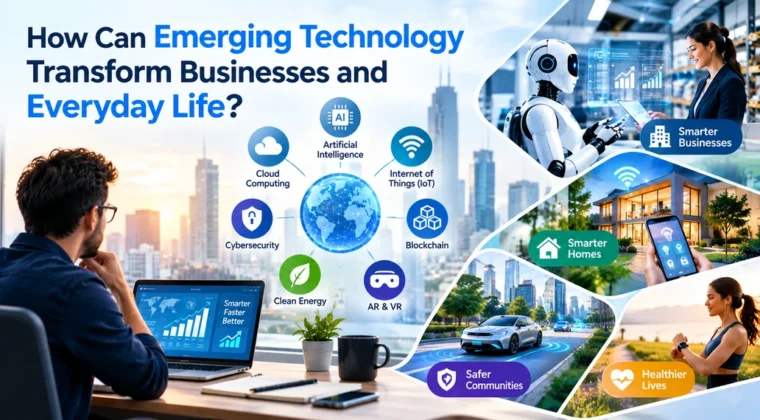
The pace of change in the modern world is often described as relentless, but perhaps no single force encapsulates this dynamism better than emerging technology. These are not just incremental updates to existing gadgets; they are foundational shifts in how we generate power, create goods, manage our health, and interact with the digital realm. From artificial intelligence evolving into a physical “agent economy” to breakthroughs in energy and medicine, we are standing on the precipice of a new era. This comprehensive guide explores the key areas where these innovations are poised to reshape both the corporate landscape and our daily routines, offering expert insights and actionable takeaways for navigating the future.
The Invisible Layer: How AI is Moving Beyond the Screen
For years, artificial intelligence has been a tool we actively use—typing prompts into a chatbot or asking a virtual assistant for the weather. However, a significant shift is underway, with emerging technology steering AI towards becoming an “invisible layer of intelligence woven into the systems we rely on every day.” Instead of demanding our direct input, AI will increasingly exist within the environment, adapting to us automatically.
AI in the Business World
In the corporate sector, this manifests as “agentic AI”—autonomous systems that handle complex tasks without human supervision. The World Economic Forum’s 2026 cohort of Technology Pioneers highlights companies building the infrastructure for this agent economy, including identity verification and payment systems specifically designed for AI agents. This means your future employees or service providers may not be human but specialized AI agents capable of negotiating, purchasing, and managing resources independently.
AI in Everyday Life
For everyday life, this transition makes technology more intuitive. Consider smart homes that don’t just respond to voice commands but anticipate your needs by adjusting lighting and temperature based on your routine. In healthcare, it means moving from reactive care to proactive monitoring. Imagine a wearable that continuously tracks your vitals and automatically alerts your doctor to irregularities, seamlessly integrating into your life without requiring you to actively “use” a device. This integration of physical and digital worlds is a hallmark of current emerging technology.
The Infrastructure Behind the Invisible AI
The shift toward invisible AI requires significant infrastructure investment. Companies are racing to develop specialized chips, edge computing solutions, and robust data pipelines that can handle the massive processing requirements of autonomous systems. This infrastructure is becoming as essential as electricity was to the industrial revolution. As AI becomes more embedded in our environment, the question shifts from “How do I use this tool?” to “How does this tool serve me without my awareness?”
Powering the Future: The Convergence of Energy and Compute
One of the most critical challenges—and opportunities—lies at the intersection of energy and computing. As AI models grow more complex and data centers proliferate, their energy consumption is skyrocketing. The emerging technology sector is responding with a massive push to reimagine energy generation and distribution.
The Data Center Energy Challenge
According to industry forecasts, data centers are expected to consume twice as much power by 2030. This staggering demand is driving innovation in energy production. Tech pioneers are exploring everything from compact modular nuclear reactors (SMRs) and microreactors to advanced geothermal systems that tap into “superhot” rocks deep beneath the Earth’s surface. This is a direct response to the growing demand for reliable, carbon-free power to sustain the AI revolution. Nuclear energy technologies, including fusion, are making a significant appearance on the agenda for 2026.
Strategic Implications for Businesses
For businesses, this convergence represents a strategic necessity. Cloud computing costs are directly tied to energy, and companies that invest in sustainable or off-grid solutions will gain a competitive advantage. Furthermore, innovations like “Everything-to-Grid” technology are transforming facilities from simple consumers to “prosumers” that can manage and supply energy back to the grid. A factory equipped with battery storage and solar panels could power its operations during peak hours and sell surplus energy when it’s most profitable, turning a cost center into a revenue stream.
Energy Transformation at Home
For homeowners, the “Everything-to-Grid” concept suggests a future where electric vehicles and home batteries play a central role in household energy management. Your car could charge when electricity is cheap and power your home during expensive peak hours. This represents a significant evolution in emerging technology for the consumer market, empowering individuals to participate actively in the energy economy.
Renewable Energy Breakthroughs
Beyond nuclear and geothermal, other renewable technologies are advancing rapidly. Perovskite solar cells offer the promise of cheaper, more efficient solar panels that can be manufactured using simpler processes. Advanced wind turbine designs capture energy from lower-speed winds, making wind power viable in more locations. Energy storage solutions, including solid-state batteries and flow batteries, are addressing the intermittency challenge that has long plagued renewables. These innovations are making clean energy more reliable and accessible than ever before.
The H-E-R-O Framework in Action
To make sense of the vast landscape of innovation, experts are categorizing emerging technology into four distinct pillars: Health, Energy, Resources, and Optimization—aptly termed “HERO.” This framework helps us understand how diverse technologies are converging to solve global problems.
H for Health: Personalized Medicine and Precision Care
The future of medicine is personal. The selection of the 2026 top emerging technology highlights this shift, particularly with the rise of personalized mRNA cancer vaccines. Unlike traditional vaccines, these are custom-built for each patient. By sequencing a patient’s tumor cells, medical professionals can create a vaccine that trains the immune system to recognize and attack specific cancer mutations. This represents a massive leap from “one-size-fits-all” treatments to precision medicine.
Exosome Drug Delivery Systems
Similarly, exosome-based drug delivery systems are changing how medicine is administered. Exosomes are tiny vesicles naturally produced by cells; in the future, they can be engineered to carry therapeutic cargo directly to diseased cells, bypassing the body’s natural defenses, including the blood-brain barrier. This emerging technology could unlock treatments for previously untreatable brain tumors and neurodegenerative diseases like Alzheimer’s. The shift from experimentation to digital modeling is accelerating these discoveries, allowing researchers to test solutions virtually before going to the lab.
AI in Diagnostics and Drug Discovery
Artificial intelligence is revolutionizing medical diagnostics. AI algorithms can now detect early signs of diseases from medical imaging with accuracy matching or exceeding human experts. In drug discovery, AI models are analyzing millions of chemical compounds to identify promising drug candidates in weeks rather than years. This acceleration is bringing treatments to patients faster and at lower costs. The integration of AI with genomic data is enabling truly personalized treatment plans tailored to an individual’s genetic makeup.
Wearable Health Technology
The proliferation of wearable health devices is generating unprecedented amounts of health data. Smartwatches can detect irregular heart rhythms, monitor blood oxygen levels, and even measure stress through electrodermal activity. These devices are becoming medical-grade, with some receiving FDA approval for specific diagnostic applications. The continuous monitoring enabled by these wearables provides healthcare providers with a comprehensive picture of a patient’s health, enabling early intervention and better outcomes.
E for Energy: Transition and Infrastructure
As highlighted earlier, the energy sector is undergoing a radical transformation. Beyond generation, new technologies are improving grid efficiency. “Passive radiative cooling materials,” for example, can cool buildings without electricity by emitting heat into outer space. These are not sci-fi concepts; they are already being incorporated into building codes worldwide.
Direct Lithium Extraction
Traditional energy extraction is also getting a sustainability upgrade. Direct lithium extraction (DLE) technology allows for the rapid and efficient recovery of lithium from brine, significantly reducing the environmental impact and time required compared to traditional evaporation ponds. This emerging technology could stabilize the supply chain for electric vehicle batteries, making them more affordable and environmentally friendly.
Smart Grid Technologies
The modernization of electrical grids is incorporating advanced sensors, communication networks, and AI-driven analytics. Smart grids can detect faults, reroute power, and balance loads automatically, improving reliability and reducing outages. They also enable dynamic pricing, encouraging consumers to shift their energy consumption to off-peak hours, which reduces strain on the grid and lowers costs.
Hydrogen Economy
Green hydrogen—produced using renewable energy to split water molecules—is emerging as a versatile energy carrier for applications where electrification is challenging. Industries like steel manufacturing, long-haul shipping, and aviation are exploring hydrogen as a cleaner alternative to fossil fuels. Advances in electrolysis efficiency and hydrogen storage are making this vision more practical.
R for Resources: Securing Critical Materials
The global supply chain is fragile, and securing critical raw materials is a geopolitical priority. Technologies like PFAS degradation are tackling environmental pollution by breaking down “forever chemicals” that have accumulated in water and soil. Methods involving supercritical water oxidation and electrochemical degradation can destroy these molecules, offering a path to clean up industrial waste.
Recycling and Urban Mining
Furthermore, researchers are developing ways to recover minerals from waste. For instance, lithium can be extracted from geothermal plant brine or even recycled from old batteries using new methods. This not only secures supply but also reduces the environmental footprint of resource extraction. The focus on resource efficiency is a key signal indicating where innovation is headed. This concept of “urban mining”—recovering valuable materials from discarded products—is becoming economically viable as extraction technologies improve.
Water Conservation and Desalination
Water scarcity is an increasingly urgent challenge, and emerging technologies are addressing it from multiple angles. Advanced desalination technologies, including graphene-based membranes and forward osmosis, are making seawater conversion more energy-efficient. Atmospheric water generators can extract moisture from the air, providing clean drinking water in arid regions. Smart irrigation systems using soil sensors and weather data optimize agricultural water use, reducing waste while maintaining crop yields.
Sustainable Materials
The development of sustainable materials is another frontier. Bioplastics derived from plant sources are replacing petroleum-based plastics in some applications. Self-healing materials extend product lifetimes, reducing the need for replacements. Engineers are also designing for disassembly, ensuring that products can be easily recycled at the end of their life cycle.
O for Optimization: The AI and Quantum Era
Optimization is the layer that connects everything. This involves using AI to make existing systems more efficient. For example, start-ups are using generative AI to forecast grid capacity, enabling data centers to find unused energy “slots” without building new infrastructure.
Quantum Computing Applications
Quantum computing is also emerging from the lab to tackle real-world problems. Quantum simulation for drug discovery is a prime example. Quantum computers can map molecular interactions atom by atom, predicting how a drug will fold and behave before physical testing. This accelerates the development of new drugs and reduces the astronomical cost of R&D. As Professor Sudeep Pasricha from Colorado State University notes, this requires a strong ethical focus, ensuring that these powerful tools don’t exacerbate environmental strain.
Supply Chain Optimization
AI-driven supply chain optimization is transforming logistics. Predictive analytics can anticipate disruptions from weather, geopolitical events, or supplier issues, allowing companies to proactively adjust their plans. Route optimization algorithms reduce fuel consumption and delivery times. Warehouse automation using robots and computer vision increases efficiency and accuracy. These optimizations are yielding substantial cost savings and environmental benefits.
Financial Services Transformation
In the financial sector, AI is revolutionizing everything from fraud detection to investment management. Algorithmic trading executes transactions in microseconds, capitalizing on market inefficiencies. Personalized financial advice is becoming accessible to a broader audience through robo-advisors. Predictive models assess credit risk more accurately, expanding access to capital for underserved populations.
Key Emerging Technologies Shaping the Next Decade
To better visualize the landscape, here is a breakdown of some of the most impactful emerging technologies identified by leading institutions and their practical applications.
| Technology | Description | Key Impact |
|---|---|---|
| Everything-to-Grid | Turns buildings, EVs, and devices into grid resources for two-way energy flow. | Stabilizes renewable energy grids; reduces electricity costs; creates “prosumer” opportunities. |
| Personalized mRNA Vaccines | Analyzes tumor cells to train the immune system to attack specific cancer mutations. | Revolutionizes oncology; represents the peak of precision medicine. |
| Quantum Simulation | Uses quantum computers to accurately map molecular structures for drug discovery. | Drastically reduces drug R&D costs and time; enables treatments for complex diseases. |
| Direct Lithium Extraction | Extracts lithium from brine in hours, not months, with less environmental damage. | Secures the battery supply chain; enables the EV revolution. |
| Passive Cooling Materials | Cools surfaces by radiating heat into space without electricity. | Reduces building energy consumption; supports climate goals. |
| Exosome Drug Delivery | Uses cell-derived vesicles to deliver therapeutics across biological barriers. | Provides new treatments for brain diseases and targeted cancer therapies. |
The Impact on Small and Medium Enterprises
While large corporations have resources to adopt emerging technologies rapidly, small and medium enterprises (SMEs) face unique challenges and opportunities. The democratization of technology through cloud platforms, open-source tools, and software-as-a-service models is leveling the playing field.
AI for Small Business
Affordable AI tools are enabling small businesses to automate customer service through chatbots, personalize marketing campaigns, and optimize inventory management. These tools require minimal technical expertise and can deliver immediate returns on investment. For example, a small retail store can use AI-powered analytics to predict which products will sell best in different seasons, reducing waste and increasing profitability.
Cloud Computing Accessibility
Cloud computing has dramatically reduced the cost of accessing sophisticated technology. Small businesses can now leverage the same infrastructure as large enterprises, paying only for what they use. This flexibility allows SMEs to scale their technology investments as they grow, without the burden of large upfront capital expenditures.
Challenges and Solutions
However, SMEs often struggle with limited resources for technology implementation and training. Governments and industry associations are developing programs to address this, offering grants, training programs, and advisory services. Partnerships with technology providers and universities can also provide access to expertise. The key is for SMEs to adopt a strategic, phased approach to technology adoption, prioritizing areas with the highest potential impact.
The Future of Work: Human-Machine Collaboration
The integration of emerging technology into the workplace is fundamentally changing how we work. Rather than wholesale replacement of human workers, the trend is toward human-machine collaboration, where technology augments human capabilities.
Augmented Workforce
Augmented reality (AR) and virtual reality (VR) are transforming training and remote collaboration. AR headsets can overlay digital information onto physical environments, guiding workers through complex assembly processes or repair procedures. VR enables immersive training simulations that are safer and more cost-effective than on-the-job training.
Reskilling and Upskilling
The evolution of work demands continuous learning. Automation eliminates some routine tasks while creating new roles requiring technical and soft skills. Companies are investing in reskilling programs to help employees transition to new roles. Online learning platforms and micro-credentials make education more accessible, enabling workers to develop new competencies at their own pace.
Flexible Work Arrangements
Technology has enabled unprecedented flexibility in work arrangements. Remote and hybrid work models are now commonplace, supported by collaboration tools, high-speed internet, and cloud-based workflows. This flexibility is becoming a competitive advantage in attracting and retaining talent. However, it also presents challenges in maintaining company culture and preventing employee burnout.
The Evolution of Consumer Technology
The consumer technology landscape is evolving rapidly, with emerging technology delivering experiences that were unimaginable just a few years ago.
Immersive Entertainment
Virtual reality (VR) and augmented reality (AR) are creating new forms of entertainment. AR games overlay digital elements onto the real world, encouraging physical activity and social interaction. VR headsets provide fully immersive gaming experiences, transporting players to new worlds. As hardware becomes more affordable and content libraries grow, these technologies are reaching mainstream audiences.
Smart Home Ecosystems
Smart home technology is becoming more integrated and intuitive. Instead of controlling individual devices, homeowners can now program scenarios—”leaving home” could turn off lights, adjust the thermostat, lock doors, and arm security systems automatically. Voice assistants are evolving to understand context, enabling more natural interactions. However, concerns about data privacy and security remain significant barriers to adoption.
Personalized Shopping Experiences
E-commerce is leveraging AI to deliver highly personalized shopping experiences. Recommendation engines analyze browsing and purchase history to suggest products users might like. Virtual try-on technologies using AR let customers see how furniture would look in their homes or how clothing would fit their bodies. These innovations reduce purchase uncertainty and enhance customer satisfaction.
Ethical Considerations and Trust
As emerging technology becomes more powerful and pervasive, ethical considerations move to the forefront. Building trust in these technologies is essential for their successful adoption.
AI Ethics and Governance
The development of ethical AI frameworks is a priority for governments, industry bodies, and advocacy groups. Principles include fairness, accountability, transparency, and privacy. Challenges remain in implementing these principles consistently. Algorithmic bias, where AI systems discriminate against certain groups, has been documented in hiring, lending, and criminal justice applications. Addressing this requires diverse development teams, rigorous testing, and ongoing monitoring.
Data Privacy
The collection and use of personal data raise significant privacy concerns. Regulations like the General Data Protection Regulation (GDPR) in Europe and the California Consumer Privacy Act (CCPA) establish rights for individuals regarding their data. Technologies like differential privacy and homomorphic encryption are being developed to enable data analysis while preserving individual privacy. Consumers are becoming more aware of data practices and demanding greater control over their information.
Digital Divide
The benefits of emerging technologies are not equally distributed. The digital divide—disparities in access to technology and digital literacy—exacerbates existing social inequalities. Bridging this divide requires investment in infrastructure, education, and affordable access. Public-private partnerships are working to expand broadband access in underserved areas and develop digital literacy programs.
Environmental Impact
While emerging technologies offer solutions to environmental challenges, they also have environmental footprints. Manufacturing electronic devices requires rare earth minerals and energy. Data centers consume vast amounts of electricity and water. E-waste from discarded electronics is a growing problem. Sustainable design practices, circular economy approaches, and renewable energy deployment are addressing these issues.
The Role of Regulation and Policy
Governments play a crucial role in shaping the development and deployment of emerging technologies.
Technology Governance
Effective governance frameworks balance innovation with public protection. This includes establishing safety standards, ensuring competition, and protecting consumer rights. The challenge lies in keeping regulation pace with rapidly evolving technology. Governments are increasingly adopting “sandbox” approaches, where companies can test innovations in controlled environments before wider deployment.
International Collaboration
Many technology challenges are global in nature. Climate change, cybersecurity threats, and pandemics require international cooperation. Forums like the G7, G20, and World Economic Forum facilitate dialogue on technology governance. However, geopolitical tensions can impede cooperation. Trust and mutual benefit are essential for effective international technology governance.
Investment in R&D
Government investment in research and development is critical for sustaining innovation. Public funding supports fundamental research that may not have immediate commercial applications but generates long-term breakthroughs. Tax incentives for corporate R&D encourage private sector investment. The combination of public and private funding creates a robust innovation ecosystem.
Real-World Scenarios: Business and Everyday Life
How will these shifts feel in practice? Let’s look at three scenarios.
The Smart Grid in Your Home
You arrive home, and your electric vehicle is charged. However, you’ve set a parameter that your house should draw power from the grid only when rates are low. During a summer heatwave, your smart system recognizes that energy demand is high and expensive. Instead of drawing power, it takes energy from your car’s battery to run the air conditioning. You not only save money but are effectively participating in a decentralized energy network—a form of emerging technology that puts power literally back in the hands of consumers.
The Autonomous Business Supply Chain
A retail business uses AI agents to manage its inventory. When stock runs low, an AI agent doesn’t just order more; it sources the cheapest, most sustainable supplier, negotiates the terms, and schedules a delivery route using drones that also deliver blood supplies to rural clinics. This convergence of AI infrastructure, robotics, and logistics is set to disrupt how goods move around the world.
The Responsive City
A city deploys a network of sensors and AI to manage traffic flow dynamically. Instead of fixed timers, traffic lights adjust in real-time based on pedestrian and vehicle volume, minimizing congestion. This reduces commute times and lowers emissions. This is a clear example of “AI moving beyond the screen to drive every major industry.”
Preparing for the Future: Actionable Advice
Whether you’re a business leader, an employee, or a technology enthusiast, there are concrete steps you can take to prepare for the transformative impact of emerging technology.
For Business Leaders
-
Conduct a Technology Audit: Assess your current technology stack and identify areas where emerging solutions could create value.
-
Invest in Digital Skills: Your workforce needs training to leverage new tools effectively. Partner with educational institutions or online learning platforms.
-
Prioritize Cybersecurity: As you adopt more technology, your attack surface expands. Invest in robust security measures and employee training.
-
Embrace Agility: The technology landscape is changing rapidly. Adopt agile methodologies that allow you to pivot quickly.
-
Foster Innovation Culture: Encourage experimentation and creative problem-solving among your team.
For Employees
-
Embrace Lifelong Learning: Continuous skill development is essential for career resilience. Take advantage of online courses and professional development opportunities.
-
Develop Soft Skills: Technology may automate tasks, but human skills like creativity, emotional intelligence, and critical thinking remain valuable.
-
Be Tech-Curious: Stay informed about technology trends in your industry. Understanding new tools helps you identify opportunities and challenges.
-
Build Your Network: Connect with professionals inside and outside your field. Diverse perspectives can spark innovative ideas.
-
Practice Adaptability: Change is constant. Cultivate a mindset that embraces rather than resists change.
For Individuals
-
Understand Your Privacy: Review privacy settings on your devices and accounts. Be selective about the data you share.
-
Balance Digital and Physical: While technology enhances many aspects of life, prioritize face-to-face interactions and outdoor experiences.
-
Secure Your Devices: Use strong passwords, enable two-factor authentication, and keep software updated.
-
Curate Your Digital Diet: Be mindful of the content you consume and the time you spend on devices. Curate your feeds for quality and positivity.
-
Stay Informed: Educate yourself about new technologies and their implications. Informed citizens can participate in shaping technology policy.
Conclusion: Embracing the New Paradigm
The emerging technology landscape of 2026 presents a world of profound opportunity and significant responsibility. We are moving from a digital world where we interact with devices to a physical world that is intelligent and adaptive. The “HERO” framework helps us see that these technologies are not isolated; they are interdependent. The energy we produce enables the AI we use; the resources we secure power the materials we need; and the health breakthroughs we achieve improve the quality of life.
Key Takeaways for Businesses
For businesses, the takeaway is clear: innovation is becoming more personal, more local, and more resource-efficient. Investing in sustainable computing, understanding the potential of AI infrastructure, and preparing for quantum resilience are no longer optional—they are essential for survival and competitive advantage. The integration of emerging technology requires strategic planning, investment in skills, and a willingness to embrace change. Organizations that proactively adopt these technologies will be better positioned to thrive in an increasingly complex and competitive landscape.
Key Takeaways for Individuals
For individuals, this future promises a higher quality of life, from personalized medicine that treats the individual to homes and cities that work smarter. The challenge lies in ensuring equitable access to these tools and building trust in the systems that will soon be making decisions on our behalf. Consumers must remain vigilant about privacy and security, while actively engaging with technologies that enhance their lives. The promise of emerging technology is a future where people are healthier, safer, and more connected than ever before.
The Path Forward
By staying informed and adaptable, we can harness the power of emerging technology to build a more resilient, efficient, and healthy world. This requires collective effort from governments, businesses, and individuals. It demands thoughtful governance, responsible innovation, and a commitment to inclusive progress. The decisions we make today about technology development and deployment will shape the world for generations to come.
Explore More Topics
-
Artificial Intelligence Infrastructure: The backbone of tomorrow’s digital economy.
-
Sustainable Energy Solutions: Building a clean, reliable energy future.
-
Precision Medicine: Healthcare tailored to the individual.
-
Quantum Computing: The next frontier in processing power.
-
Future of Mobility: Autonomous vehicles, smart cities, and new transportation models.
-
Cybersecurity Evolution: Protecting digital assets in an increasingly connected world.
-
Digital Transformation Strategies: Practical approaches for organizational change.
-
Technology Ethics: Navigating the moral implications of innovation.
-
Smart Cities: The integration of technology into urban environments.
-
Digital Health Revolution: How technology is transforming healthcare delivery.
Disclaimer: This article provides general information and analysis about emerging technologies. Technology adoption decisions should be based on thorough research and consideration of specific circumstances. The content is intended for informational purposes and does not constitute professional advice in technology, business, or legal matters. Readers are encouraged to consult qualified professionals for guidance tailored to their situations.