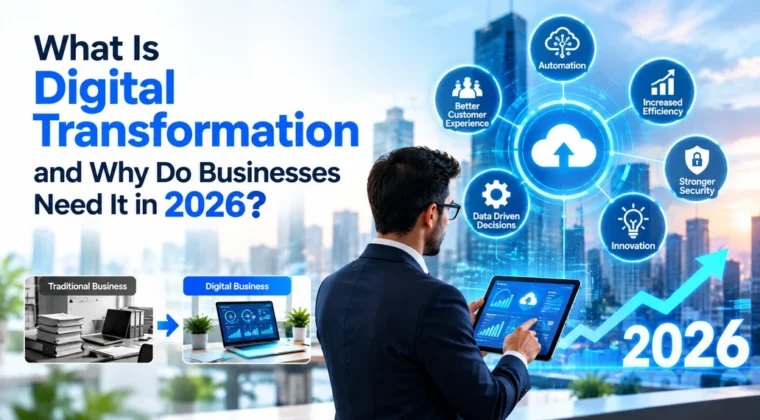
“Digital transformation” has become one of the most overused phrases in business technology — but behind the buzzword lies a genuinely important shift in how organizations operate. In 2026, digital transformation is no longer a forward-looking initiative reserved for large enterprises; it’s an ongoing necessity for businesses of every size that want to remain competitive in an increasingly digital economy.
What Does Digital Transformation Actually Mean?
At its core, digital transformation refers to the process of integrating digital technology into all areas of a business, fundamentally changing how it operates and delivers value to customers. This goes beyond simply adopting new software — it involves rethinking processes, culture, and customer experience around what digital tools now make possible.
A common misconception is that digital transformation is a one-time project with a clear finish line. In reality, it’s an ongoing process, since the technology landscape continues to evolve and businesses must continuously adapt. Companies that treat it as a single initiative — rather than an ongoing capability — often find themselves falling behind again within just a few years as new technologies emerge.
Key Areas of Digital Transformation in 2026
1. Customer Experience
Businesses are increasingly using data and AI to personalize customer interactions, from tailored product recommendations to responsive customer support available around the clock. Meeting rising customer expectations for speed and personalization has become a major driver of digital transformation initiatives. Customers today compare every experience — not just to direct competitors, but to the best digital experiences they’ve had anywhere, raising the bar significantly.
2. Operational Efficiency
Automating repetitive processes, integrating disconnected systems, and using data analytics to inform decisions all fall under the operational side of digital transformation. Businesses that successfully modernize their operations often find that efficiency gains compound over time, as streamlined processes free up resources to invest in further improvements.
3. Data-Driven Decision Making
Rather than relying on intuition or delayed reporting, digitally transformed businesses use real-time data and analytics to guide strategic decisions, allowing them to respond to market changes far more quickly than competitors relying on outdated processes. This shift requires not just new tools, but also a cultural change toward trusting and acting on data consistently.
4. Cloud and Infrastructure Modernization
Moving away from legacy, on-premises systems toward flexible, scalable cloud infrastructure is often a foundational step in digital transformation, enabling the speed and adaptability that other initiatives depend on. Without this foundation, many other transformation efforts struggle to gain real traction.
5. Workforce Enablement
Digital transformation also involves equipping employees with the tools, training, and digital literacy needed to work effectively in a technology-driven environment. Even the best software delivers limited value if employees aren’t properly trained or supported in using it.
Why Digital Transformation Matters More in 2026
Customer Expectations Keep Rising
Customers increasingly expect fast, personalized, and seamless digital experiences across every interaction with a business. Companies that fail to meet these expectations risk losing customers to competitors who can, often without much warning until customer churn becomes noticeable in the numbers.
Competitive Pressure From Agile Startups
Newer, digitally native companies often move faster and operate more efficiently than established businesses burdened by legacy systems. This forces traditional companies to accelerate their own transformation efforts just to stay competitive. Our article on how business innovation helps companies grow and stay competitive explores this competitive dynamic in more detail.
AI Is Raising the Bar
As AI becomes more embedded in everyday business tools, companies that haven’t modernized their data and infrastructure struggle to take advantage of AI-driven insights and automation, putting them at a growing disadvantage. AI tools are generally only as effective as the data feeding them, meaning businesses with fragmented, poor-quality data see far less benefit from AI adoption than those with clean, well-integrated systems.
Economic Pressure to Do More With Less
In uncertain economic conditions, digital transformation often becomes less of a growth initiative and more of a survival strategy, as businesses look for ways to improve efficiency and reduce costs without sacrificing quality or customer experience.
Common Challenges in Digital Transformation
Despite widespread recognition of its importance, many digital transformation initiatives struggle to deliver expected results. Common obstacles include:
- Resistance to change from employees accustomed to established processes, which can quietly undermine even well-funded initiatives if not addressed directly
- Fragmented strategy, where technology is adopted without a clear connection to business goals, resulting in disconnected tools that don’t work well together
- Legacy system dependencies that are costly and complex to replace, often because critical business processes were built around them over many years
- Insufficient leadership buy-in, leading to underfunded or deprioritized initiatives that lose momentum after an initial launch
- Measuring the wrong metrics, where businesses track technology adoption rather than actual business outcomes, making it difficult to demonstrate real value
Successful transformation typically requires strong leadership alignment, clear communication about the “why” behind changes, and a willingness to treat transformation as an ongoing process rather than a single project with a defined endpoint.
How Small and Mid-Sized Businesses Can Approach Digital Transformation
Digital transformation doesn’t require a massive budget to get started. Smaller businesses often see success by focusing on one high-impact area first — such as automating customer support or moving core operations to cloud-based tools — before expanding transformation efforts more broadly. This phased approach reduces risk while still delivering measurable improvements that build momentum and internal support for further changes.
A practical starting point is identifying the single biggest operational bottleneck or customer pain point, and addressing it with a focused digital solution before attempting a broader overhaul. This produces visible wins early, which helps secure the ongoing investment and buy-in needed for longer-term transformation efforts.
Measuring the Success of Digital Transformation
One of the most overlooked aspects of digital transformation is defining what success actually looks like before starting. Businesses that set clear, measurable goals — such as reducing customer response times, increasing operational efficiency by a specific percentage, or improving customer retention — are far better positioned to evaluate whether their efforts are working, and to make adjustments along the way rather than discovering failure only after significant investment.
Final Thoughts
Digital transformation in 2026 isn’t about chasing the latest technology trend for its own sake — it’s about building a business that can adapt quickly, meet rising customer expectations, and make smarter decisions using real-time data. Organizations that treat transformation as an ongoing commitment, rather than a one-time overhaul, are the ones best positioned to thrive as technology continues to reshape how business gets done.